
 Online Contact
 Send Message
Goat Diet and Feed Formulas for Each Growth Stage
Goats have different nutritional needs at each growth and production stage. A single, non-adjusted ration often leads to weight loss, slow growth, or low milk yield. The following sections outline key nutrient requirements and feeding directions for each stage to support practical decision making.
Basic Feeding Principles (All Stages)
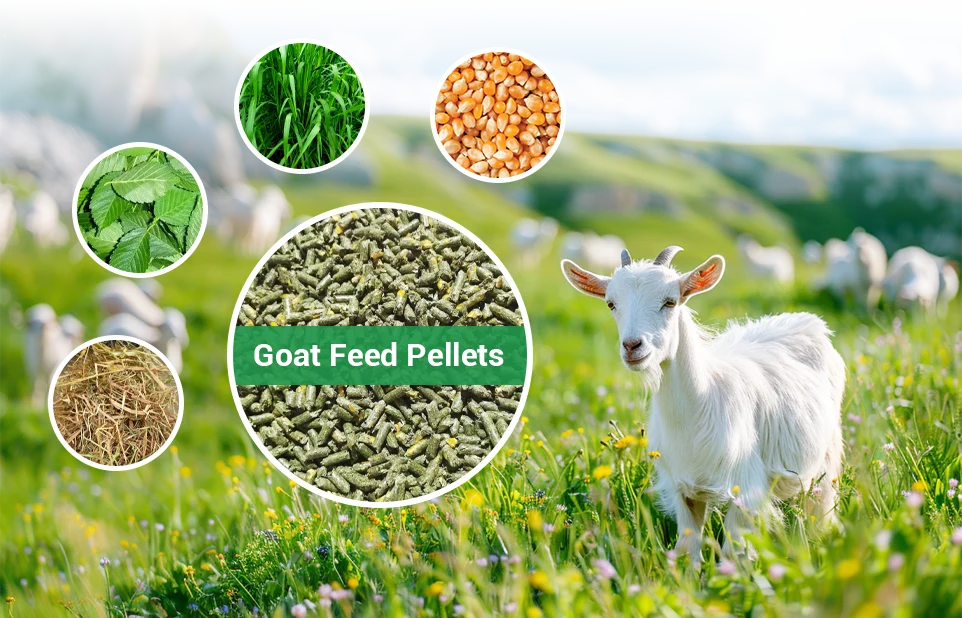
Goats are browsers, so their nutritional pattern is closer to deer than to sheep or cattle. Across all stages, the core principles are:
- Base the ration on good quality forage or hay, making up at least half of the diet.
- Provide enough long fiber to keep the rumen stable and reduce digestive problems.
- Adjust the proportion of leaves, grasses, and browse by stage, usually 25 to 50 percent.
- Introduce any feed changes gradually to allow the rumen to adapt.
- Offer loose minerals formulated for goats to maintain proper mineral balance.
- Ensure clean, fresh water is available at all times.
These principles apply to all stages and form the foundation of ration design.
Feeding Requirements for Young Goats
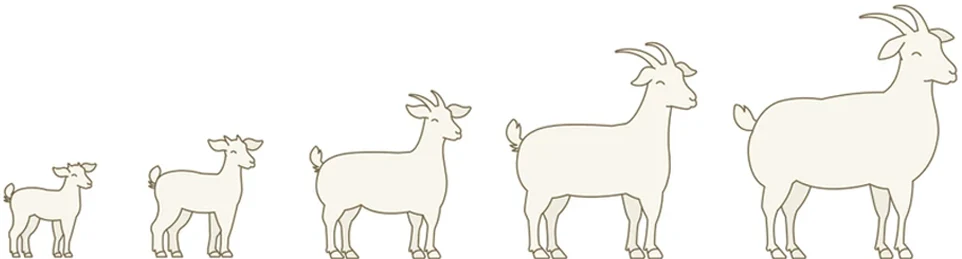
Goat feeding stages are determined by the animal's physiological needs at each point of growth, reproduction, pregnancy, and lactation. These changes directly shape nutrient requirements, so rations must be designed by stage.
Newborn to Weaning (0–3 months)
This is the fastest growth period, with the highest nutrient demand.
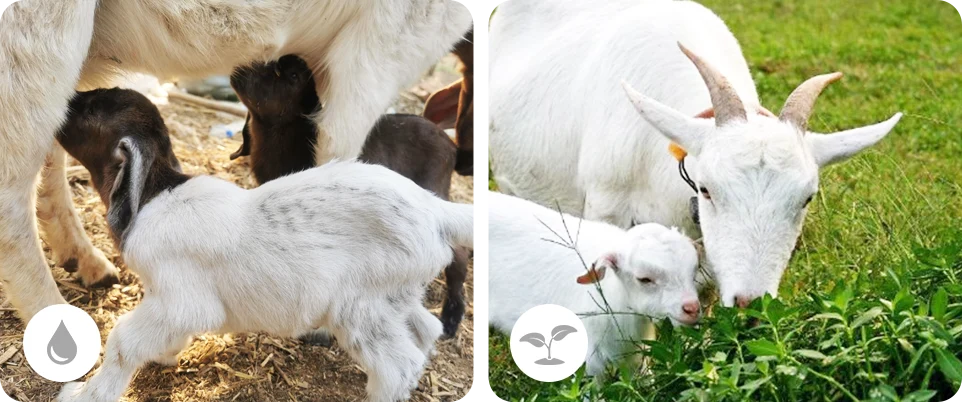
1. Colostrum feeding (first 1–3 days)
- Kids must receive enough colostrum as soon as possible for immune protection.
- Allow natural suckling for 3 to 4 days. Target intake is about 100 mL per kilogram of body weight.
2. Early forage training (from 2 weeks)
Small amounts of fresh forage can be offered to support rumen development.
3. Creep feeding (1–3 months)
Used to supplement limited milk and promote rapid growth.
- Suggested intake: 50 to 100 g per kid per day
- Protein level: about 22 percent crude protein
Example creep feed formulas
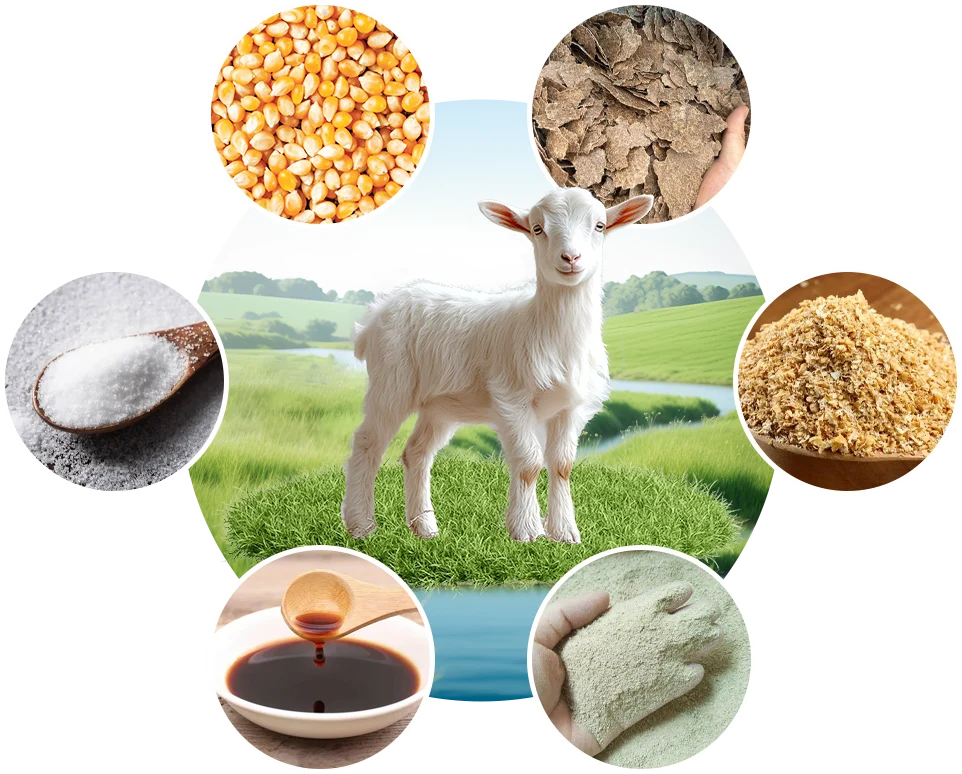
Formula A: Corn 40%, peanut meal 30%, wheat bran 10%, rice bran 13%, molasses 5%, minerals 2%, salt 1%
Formula B: Grains 60%, oil cakes 20%, rice bran 7%, fish meal 10%, minerals 2%, salt 1%
4. Feeding schedule for 31–90 days
31–60 days: Milk 400 mL per day (divided into two feedings), creep feed 100–150 g, plus free choice forage.
61–90 days: Milk 200 mL per day (two feedings), creep feed 200–250 g, plus free choice forage.
Growing Stage (Weaning to One Year)
Kids can be weaned once they reach 7 to 11 kilograms and can reliably consume about 200 grams of creep feed per day. Weaning at 8 to 12 weeks works well, but timing can be adjusted based on individual growth.
As the rumen matures, crude protein needs decrease from about 16 percent in early life (160 g per kg DM) to around 10 percent (100 g per kg DM). The diet shifts from milk plus creep feed to mainly forage with moderate concentrate.
Recommended Nutrient Levels
- Digestible crude protein (DCP): 9–10 percent
- Total digestible nutrients (TDN): 60–65 percent
Concentrate intake c an be set at 1.5 to 2 percent of body weight and adjusted as the animal grows.
Example Formula
Grains 50%, oil cakes 30%, rice bran or deoiled bran 10%, molasses or brown sugar 7%, mineral mix 2%, salt 1%
Finishing Stage (Finisher)
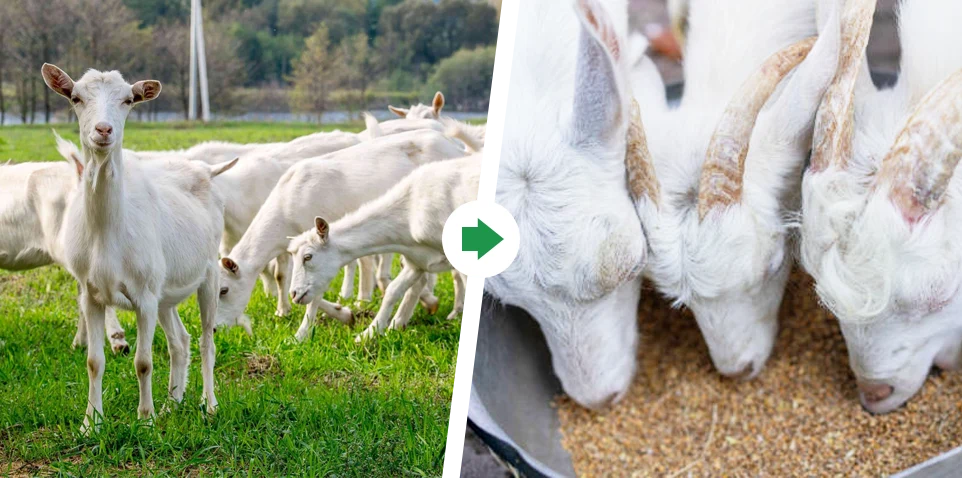
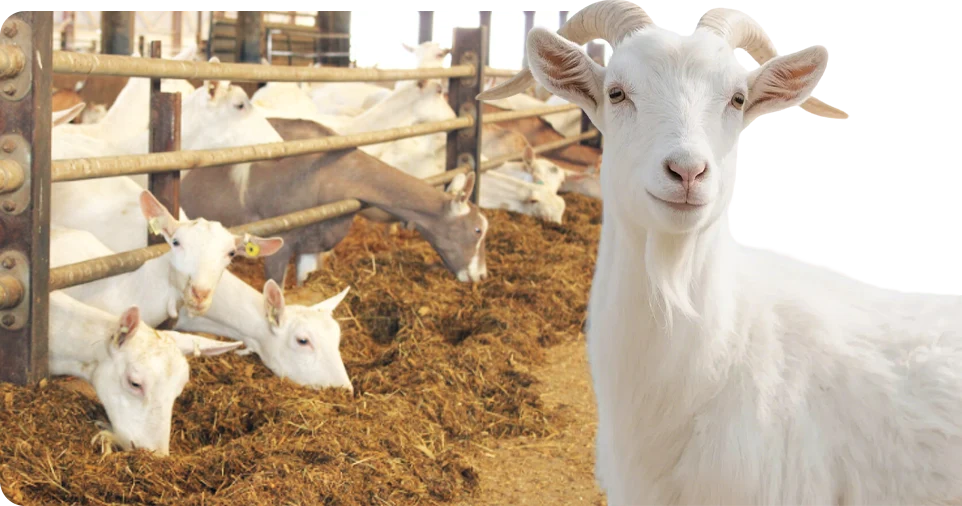
The goal during finishing is to increase body weight before marketing, usually when goats reach 20 to 30 kilograms, and to improve carcass quality. Growth rate at this stage is low, so a maintenance level ration often meets basic nutrient needs.
The forage-to-concentrate ratio can be adjusted based on the desired carcass type.
For fatter carcasses
Keep forage at 20 to 25 percent of dry matter intake and increase high energy grains in the concentrate mix.
For leaner carcasses
Raise forage to 30 to 40 percent to support higher fiber intake and lean tissue development.
Example Formulas
Formula A: Grains 30%, oil cakes 20%, rice bran 40%, molasses 7%, minerals 2%, salt 1%
Formula B: Grains (sorghum, maize, or millet) 73.2%, molasses 5%, trace mineral salt 0.5%, ammonium chloride 0.5%, limestone 0.8%, browse or forage legumes 20%
Doe Feeding and Feed Formulation
| Stage | Focus | Concentrate | Forage |
| Early pregnancy | Body condition, placenta | Low or none | 5 kg |
| Late pregnancy | Fetal growth, energy | 250–350 g | 7 kg |
| Kidding | Delivery and recovery | Minimal | Forage based |
| Lactation | Milk yield, protein and energy | 400 g+ | 10 kg |
Breeding Period (Flushing)
Raising nutrient intake 2 to 3 weeks before breeding helps improve conception rate, estrus response, and the chance of multiple births.
Feeding Amount and Formula Guidelines
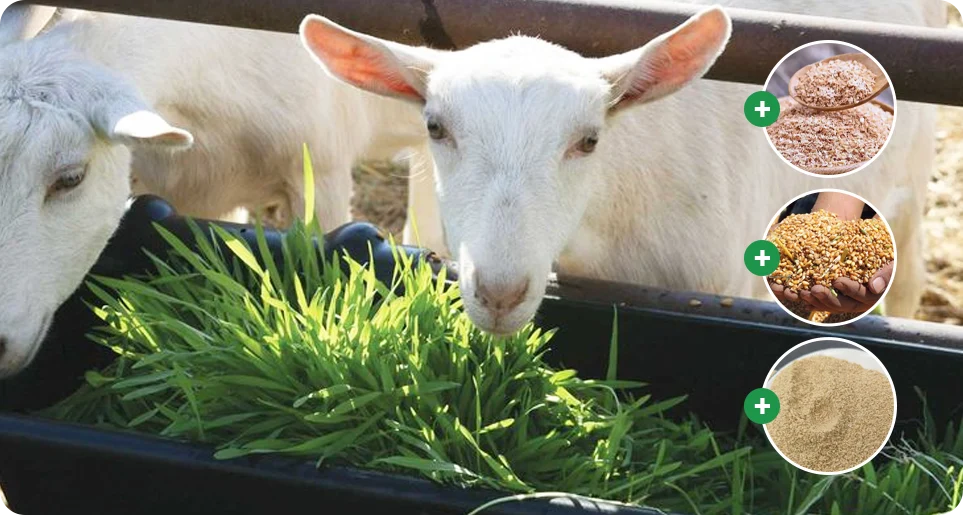
On top of the maintenance ration, add 140 to 450 grams of a mixed feed containing 12 to 16 percent crude protein. This supports flushing and improves heat and conception performance.
Suggested Ration Options
- Free choice high quality legume–grass hay
- Hay plus 150 g wheat bran
- Hay plus 250 g grains and 450 g oil cake
- Free choice legume hay plus 100 g wheat bran and 150–200 g grains
- Fresh forage at 10 percent of body weight plus 150–200 g concentrate
Over-conditioned does have lower fertility due to excess fat deposition.Check body condition at least 6 to 8 weeks before breeding and return overfed animals to a leaner, healthier state through controlled feeding and exercise.
Pregnancy Period
1. Early to Mid Pregnancy (First 4 Months)
Fetal growth is slow during this period, so nutrient needs do not rise much. The focus is maintaining body condition and supporting healthy placental and embryo development. Adequate nutrition helps reduce weak kids and pregnancy loss.
Feeding Notes
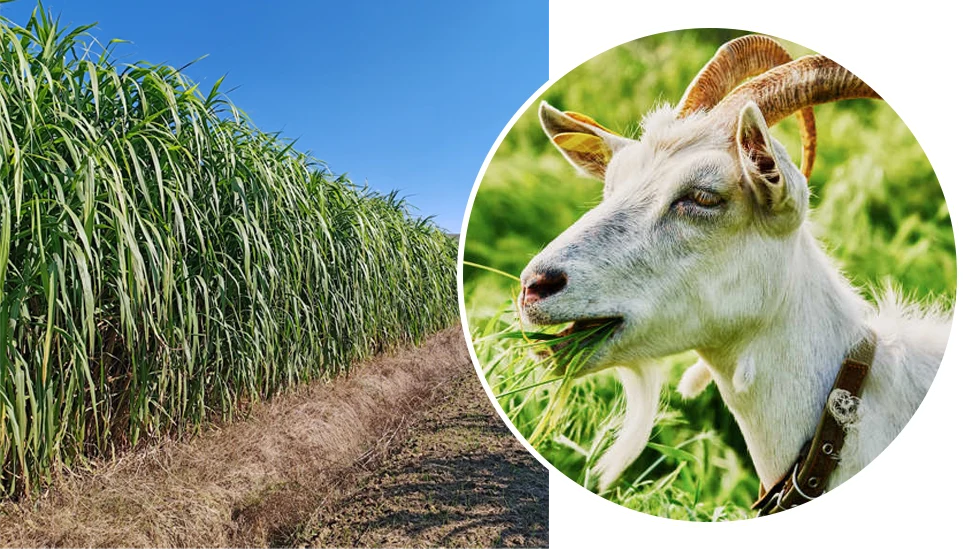
- High quality hay as the main feed
- Fresh forage for vitamins and available energy
- Keep the ration stable; avoid sudden changes
If hay quality is good, extra concentrate is not needed. Thin does may receive small amounts of wheat bran or grains.
2. Late Pregnancy (Final 6 Weeks)
Fetal weight increases rapidly, making this the period of highest nutrient demand before kidding. With multiple fetuses occupying space, rumen capacity drops, so concentrates must supply additional energy and minerals. Calcium and energy are essential to support fetal bone growth and prevent hypocalcemia and pregnancy toxemia.
Feeding Recommendation
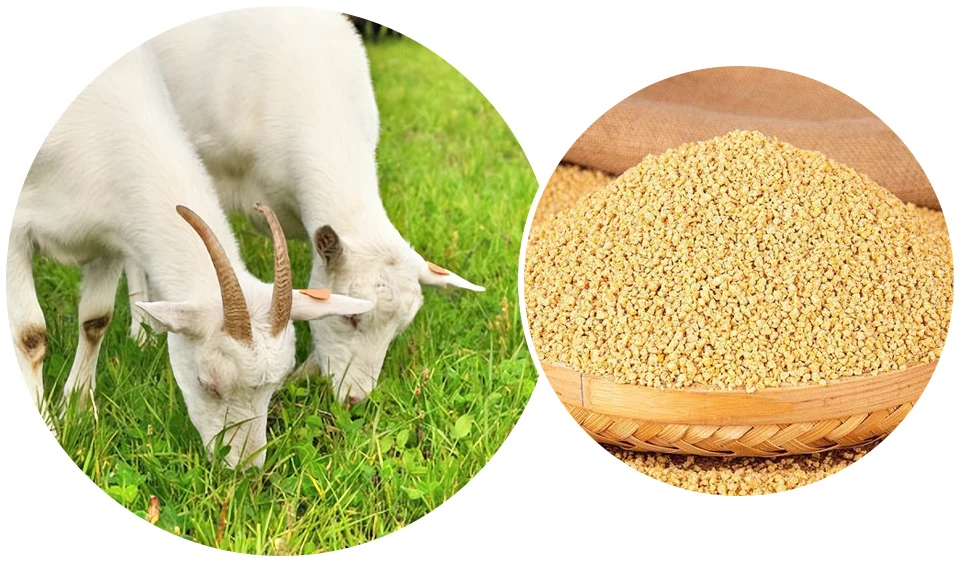
Does should graze for 4 to 5 hours each day on good pasture. Fresh forage should be offered in addition to grazing, usually around 5 kilograms and up to 7 kilograms when intake needs to increase.
3. Kidding Period
Reduce grain before and after kidding and rely on good quality roughage to avoid digestive stress. Feed only small amounts on the day of kidding, with plenty of clean water. Warm water after delivery helps recovery.
Increase the ration gradually over the next few days. Feed small meals 6–7 times per day. A 1:1 mix of wheat bran with barley, oats, or maize can help stimulate digestion and support postpartum recovery.
4. Lactation
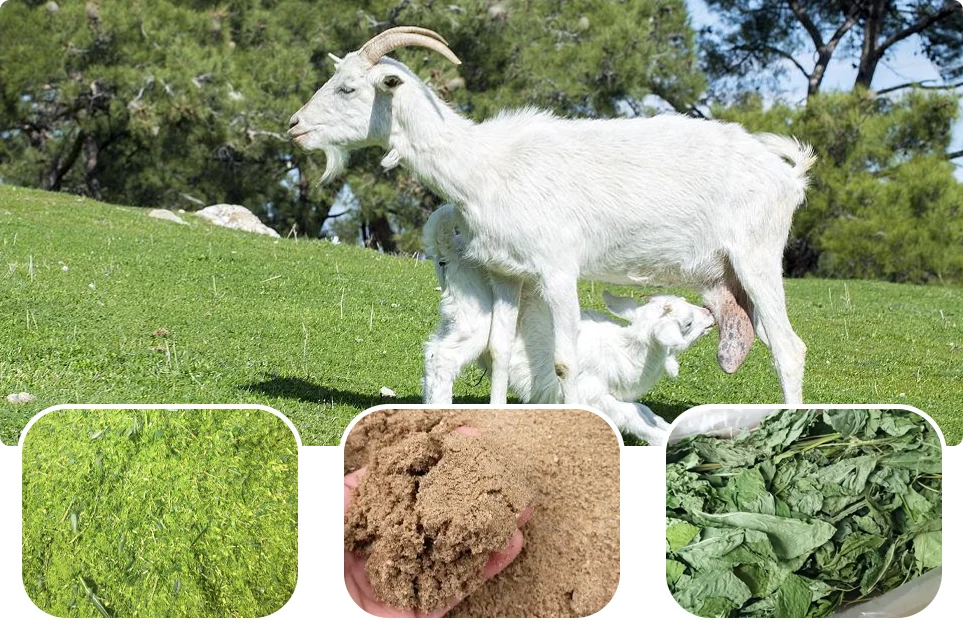
Lactation is the period of highest nutrient demand. The ration must supply enough energy and protein to maintain milk production and support kid growth.
Water intake increases sharply during lactation, often reaching four to five times dry matter intake. Lactating does typically need 7 to 15 liters of clean water per day.
Suggested Ration (in addition to 6–8 hours of grazing)
- 10 kg fresh cultivated forage daily
- 400 g concentrate mix
- 800 g high quality legume hay (for the first 75 days postpartum)
Feeding Requirements for Bucks
Feeding needs in bucks depend on whether they are in the breeding season and on their body condition and activity level.
Breeding Bucks (During the Rut)
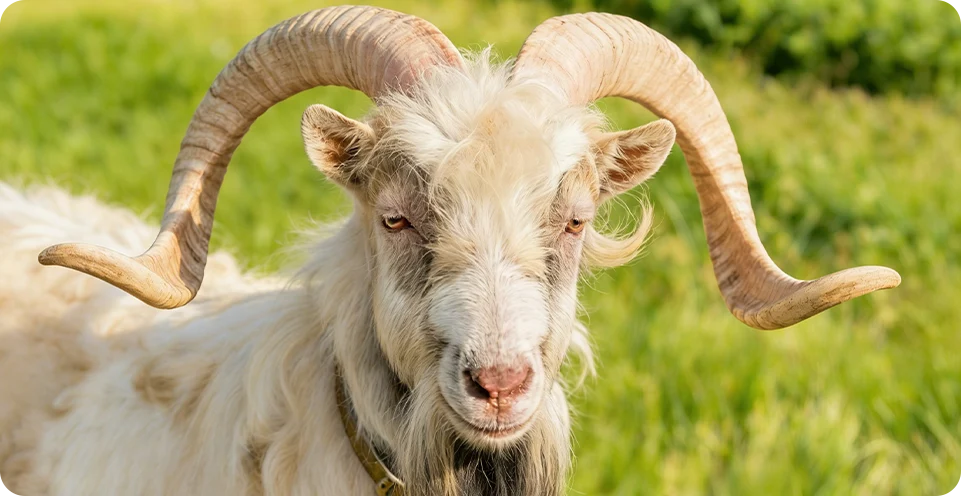
Breeding bucks need extra nutrients to support reproductive activity. Dry matter intake should be about 3 to 3.5 percent of body weight, with 500 grams to 1 kilogram of concentrate per day for an average buck.
Over conditioned bucks may show reduced fertility due to excess fat. Reduce feeding and increase exercise to bring them back to a lean, healthy state.
Example Formulas
Formula A (for improving condition before breeding or for thin bucks)
Barley or oats 45%, maize 25%, wheat 20%, soybean meal 5%, wheat bran 3%, mineral mix 2%
Formula B (for maintaining semen quality and breeding performance)
Barley or oats 35%, oats or barley 15%, maize 25%, wheat bran 10%, soybean meal 8%, molasses 3%, limestone 2%, salt 1%, premix 1%
Non-Breeding Bucks and Wethers
Outside the breeding season, bucks and wethers do not need concentrate. A small amount of grain can be offered as a treat but not in excess to avoid urinary stones.
Prevention Tip
Increasing salt to about 5 percent of the ration encourages water intake and helps reduce the risk of urinary calculi.
Goat rations need to be adjusted by stage to keep body condition and performance on track.
If you need more efficient processing for concentration or forage, feel free to contact us. We can suggest suitable equipment based on your farm size.
Need Some Help?
Contact us quickly and we will reply you within 24 hours. We will not disclose your information.