
 Online Contact
 Send Message
Goat vs Sheep Nutrition and Feed Differences
Goats and sheep are both ruminants, but they eat differently and have different nutrition needs. These differences affect how they use fiber, energy, and minerals. Many ingredients can be shared, yet the formulas still need to match each species.
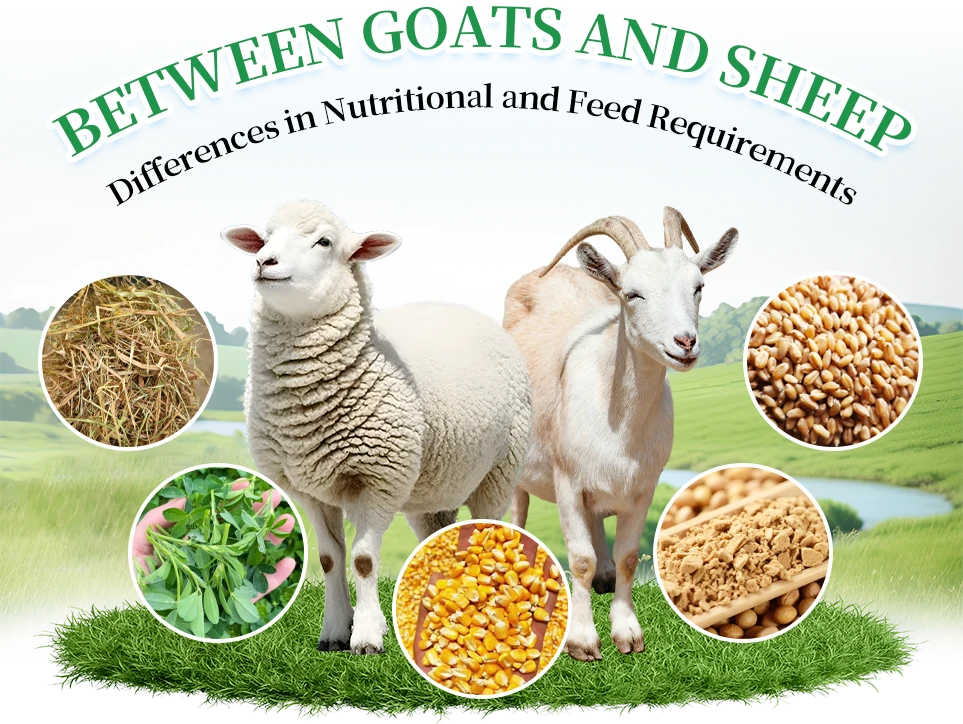
Can goats and sheep use the same feed
They can share most ingredients, but not the same diet plan.
Most roughage and concentrates work for both animals. However, because their feeding habits and nutrient focus differ, one formula cannot support good performance in both.
Ingredients commonly shared
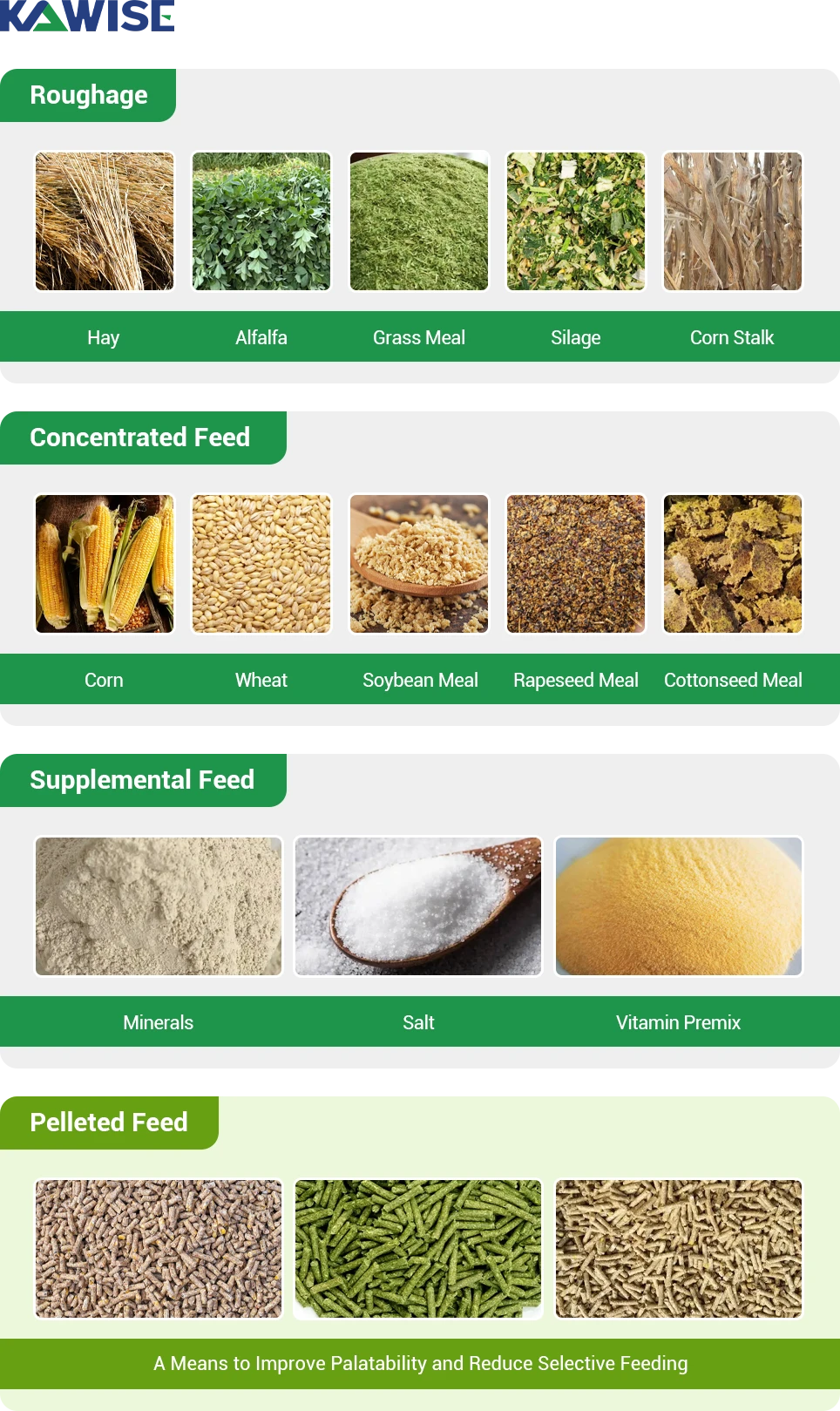
Even with the same materials, goats and sheep need different mixing ratios, particle sizes, and roughage to concentrate on balance.
To maintain intake, growth, milk production, or body condition, their diets should not be fully shared. The points below explain what drives these differences.
Economic roles and nutrition needs
Goats and sheep are both ruminants, but their economic roles differ, which leads to different nutrition targets.
- Goats are used for meat, milk, and leather.
- Sheep are mainly raised for wool and meat.
Goats have more flexible nutrient demands and do not require long periods of high energy or protein intake.
Sheep need stable energy and high-quality protein, so their diets rely more on grains and follow a more fixed structure.

Differences in feeding behavior
Goats and sheep show distinct feeding patterns in the wild. These differences influence their fiber tolerance, required particle size, and suitable diet structure.
Goats: browsers
Goats prefer leaves, shrubs, and vines. They tolerate higher fiber and can break down coarse materials efficiently. This allows broad use of grass meal, leaf meal, and similar roughage sources.
Goat diets favor:
- Higher fiber levels
- Larger portions of grass meal, leaf meal, and shrub meal
- Larger pellet sizes
Sheep: grazers
Sheep feed mainly on soft grass and herbaceous plants. They are more sensitive to forage fineness and energy consistency. Fine forage combined with grains supports stable intake and growth.
Sheep diets favor:
- Finer forage
- More uniform diet structure
- Better integration with grain concentrates

Key differences in nutrient requirements
Goats and sheep require balanced nutrients, but several core needs differ, especially mineral tolerance and maintenance levels.
Copper: the most distinct difference
Both species need the same macro and trace minerals.
Copper is the mineral with the greatest gap in requirements and tolerance.
Sheep: very low copper tolerance
Sheep absorb and store copper in a way that makes them highly sensitive to excess. The safe range between deficiency and toxicity is narrow.
Sheep should receive feed and mineral mixes formulated specifically for sheep.
Goats: higher copper needs
Goats require more copper to support bone growth, coat condition, pigmentation, nerve function, red blood cell formation, and immunity.
Soil copper may be poorly absorbed when elements such as molybdenum are present, increasing deficiency risk in grazing goats.
Goat diets should therefore use mineral formulas designed for goats to maintain adequate and safe copper intake.
Differences in maintenance requirements
During non productive periods, goats and sheep both need basic nutrients to maintain body weight and metabolic function. These maintenance needs differ slightly.
Goats have higher maintenance needs
On a body weight basis, sheep already require more maintenance energy than cattle, and goats are slightly higher than sheep. As a result, goats may lose condition more easily when forage quality is limited, and stable roughage quality becomes important.
Vitamin needs
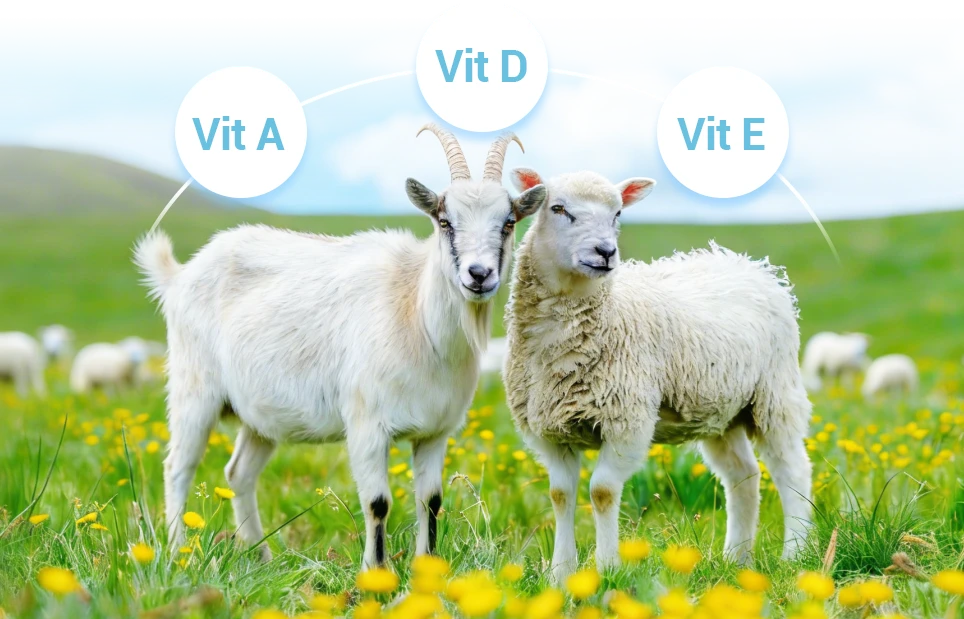
Both species follow similar vitamin requirements, with emphasis on vitamins A, D, and E:
- Vitamin A: needed when green forage is limited; supports immunity, vision, and reproduction.
- Vitamin D: needed with low sunlight or confinement; supports bone development.
- Vitamin E: works with selenium to support immunity and muscle health; helps prevent white muscle disease.
Vitamins B, C, and K are produced by rumen microbes and usually do not require additional supplementation.
Goats vs Sheep: Key Diet Differences
| Item | Goats | Sheep |
| Feeding behavior | Browsers | Grazers |
| Fiber use | Coarse fiber tolerant | Prefer fine fiber |
| Energy needs | Lower energy demand | Higher energy demand |
| Diet stability | Adapt to changes | Need stable diet |
| Mineral focus | Higher copper needs | Copper sensitive |
| Maintenance | Slightly higher | Slightly lower |
| Vitamins | A, D, E when limited forage | Same needs, more sensitive |
We offer complete feed processing solutions for goats and sheep, covering grinding, mixing, and pelleting, with flexible formulas for farms of all sizes.
FAQ
What foods are toxic to sheep and goats?
Toxic plants include rhododendron, oleander, and rhubarb leaves. Spoiled feed also poses a risk.
How often should sheep and goats be fed?
They are frequent grazers. Provide constant forage access on pasture or feed two to three times daily in confinement.
How should roughage and concentrates be balanced?
Use roughage as the foundation. Add concentrates only to meet higher demands in finishing, late pregnancy, or lactation.
Can grains be fed long term?
Yes, in controlled amounts. Excess grain increases acidosis risk, so feed with roughage and adjust based on condition.
Are salt or mineral blocks necessary?
They help when minerals in the diet are limited. Use clearly formulated, species-appropriate products.
Need Some Help?
Contact us quickly and we will reply you within 24 hours. We will not disclose your information.