
 Online Contact
 Send Message
Best Homemade Rabbit Feed Formulas for Practical Feeding
Feed formulation directly affects rabbit growth performance and feeding cost. Nutrient needs vary significantly at different growth stages, and improper formulas can reduce feed intake stability and impact health. The following feed formulation guidelines are intended for practical on farm use and flexible adjustment.
Starter Feed Formula for Beginners
For farmers new to farm feed mixing, it is best to start with a simple and stable base formula.
This formula uses common raw materials with moderate nutrition levels, making it easier to observe feed intake and digestion while reducing adjustment risk.
Reference Formula Ratio
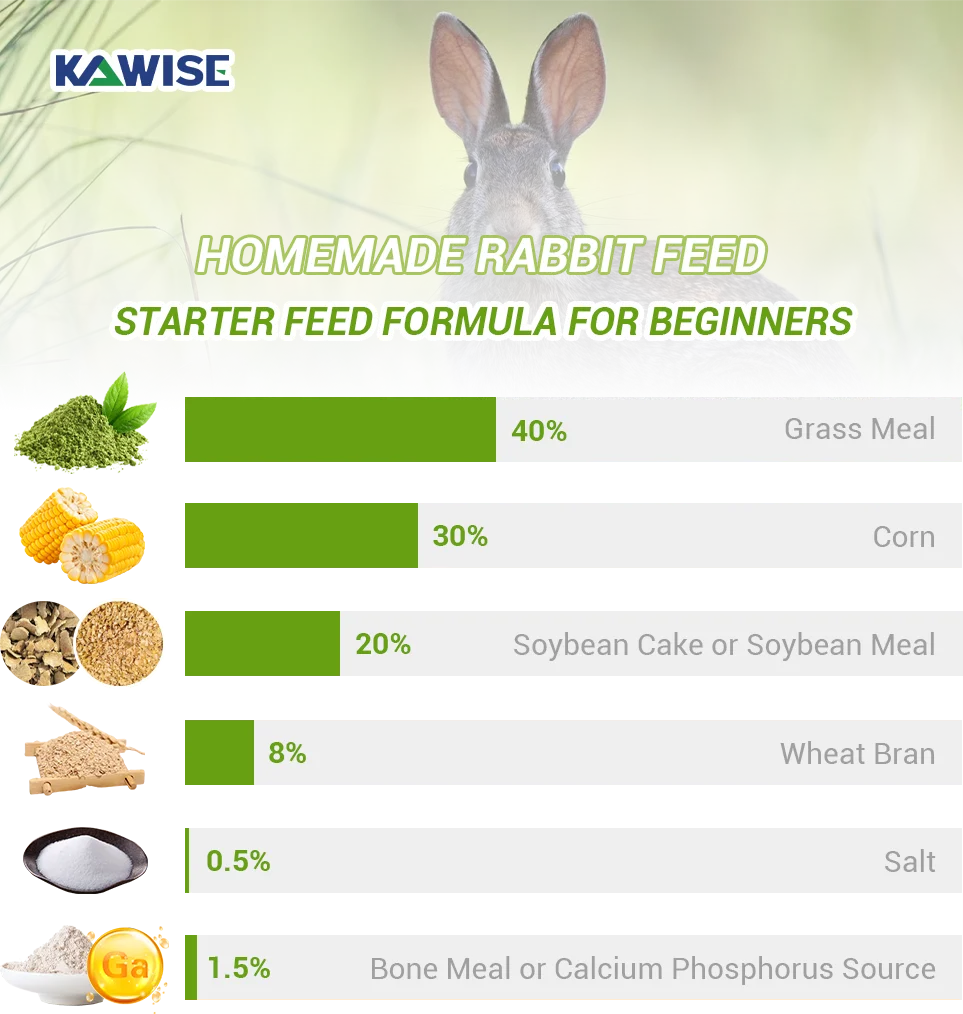
Grass meal 40 %, Corn 30 %, Soybean cake or soybean meal 20 % (fully heat treated before use), Wheat bran 8 %, Salt 0.5 %, Bone meal or calcium phosphorus source 1.5 %
Use Recommendations
- Suitable for rabbits from post weaning to early fattening stage
- Start with a small trial and observe intake and manure for five to seven days
- If performance is stable, continue the formula or adjust gradually. Avoid frequent changes
Rabbit Feed Formulas by Growth Stage
The following formulas are for reference only and can be adjusted based on locally available raw materials.
a. Young Rabbit Stage (18–30 Days)
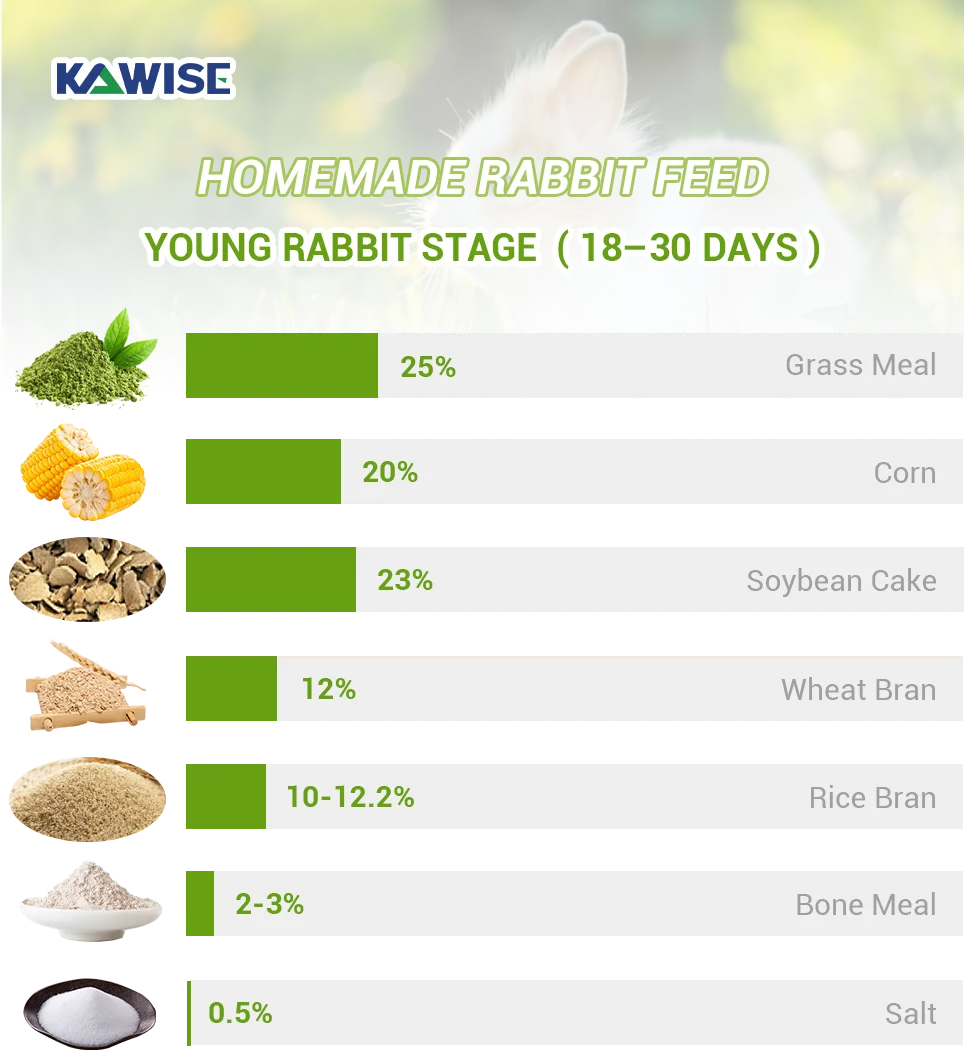
Grass meal 25%, Corn 20%, Soybean cake 23% fully heat treated and ground, Wheat bran 12%, Rice bran 10–12.2%, Bone meal 2–3%, Salt 0.5%
Optional: add 0.1% rabbit premix, mold toxin binder, or compound probiotics to support immunity and help prevent coccidiosis.
b. Breeding Buck Rabbit Formula
Feed should be adjusted based on whether the buck is in the breeding period to balance body condition and reproductive performance.
Breeding Period
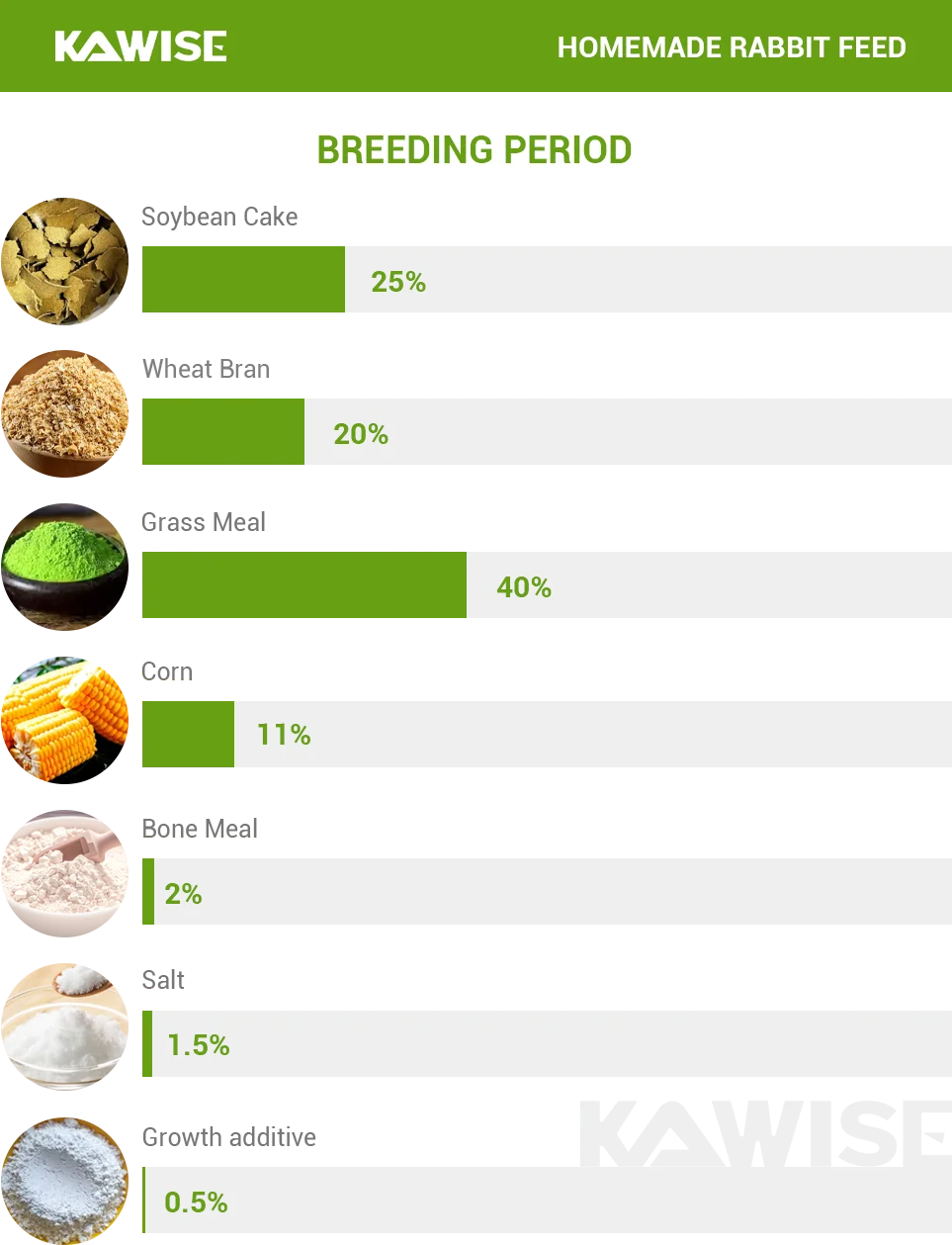
Soybean cake 25%, Wheat bran 20%, Grass meal 40%, Corn 11%, Bone meal 2%, Salt 1.5%, Growth additive 0.5%
Non-Breeding Period
Formula 1
Grass meal 45% to 48%, Soybean cake 15% to 18%, Corn 15% to 16.7%, Salt 1.5% to 2%
Formula 2
Grass meal 35% to 40%, Barley or corn 24%, Wheat or oats 10%, Soybean cake 12% to 15%(fully heat treated and ground), Wheat bran 12%, Fish meal 2.5%, Meat meal 0.5%, Bone meal 0.5%, Salt 0.5%

c. Doe Rabbit Formula (Dynamic Adjustment)
Nutrient requirements for does change significantly during pregnancy and lactation and should be adjusted by stage.
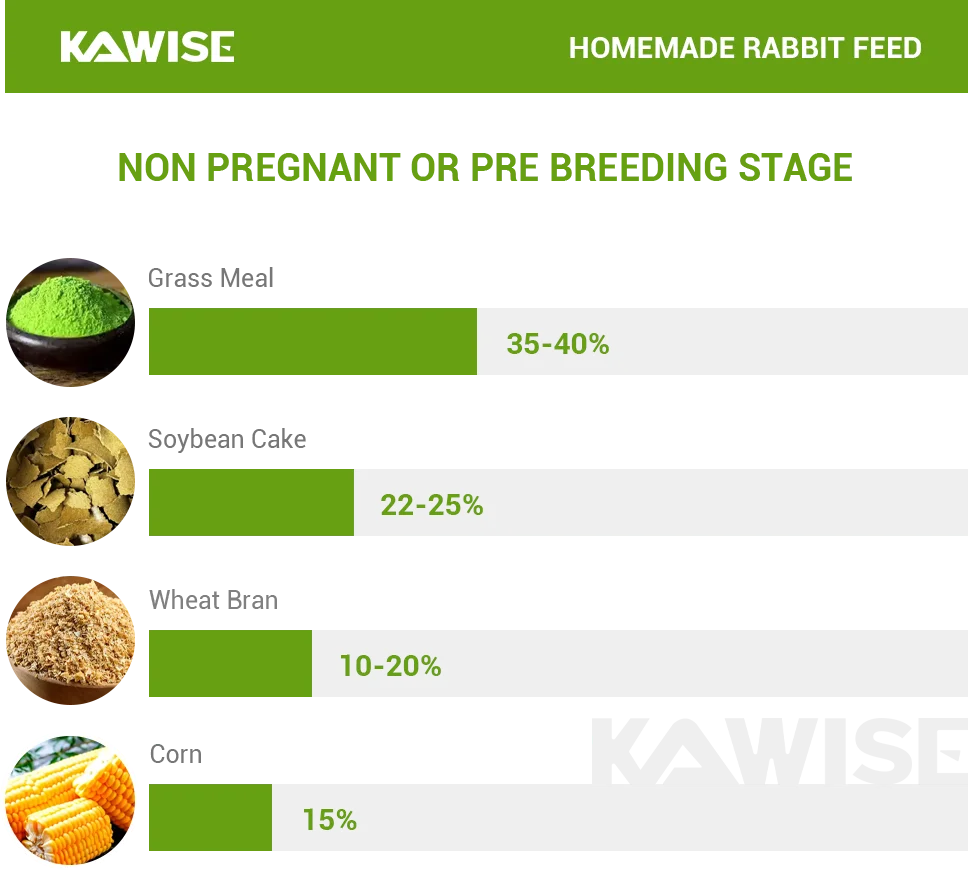
Non Pregnant or Pre Breeding Stage
Grass meal 35%–40%, Soybean cake 22%–25%, Wheat bran 10%–20%, Corn 15%
Ten to fifteen days before breeding, add one vitamin E tablet per day to support estrus and ovulation.
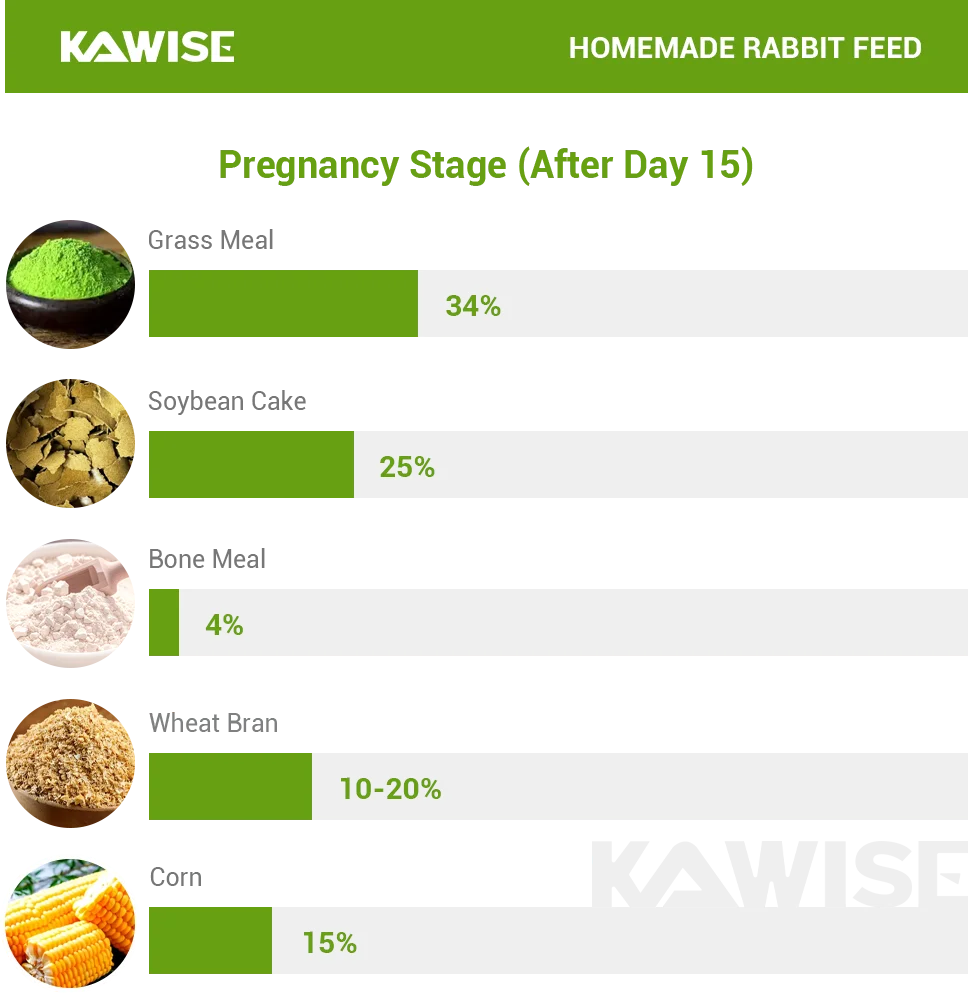
Pregnancy Stage (After Day 15)
Grass meal 34%, Soybean cake 25%, Bone meal 4%, Wheat bran 10%–20%, Corn 15%
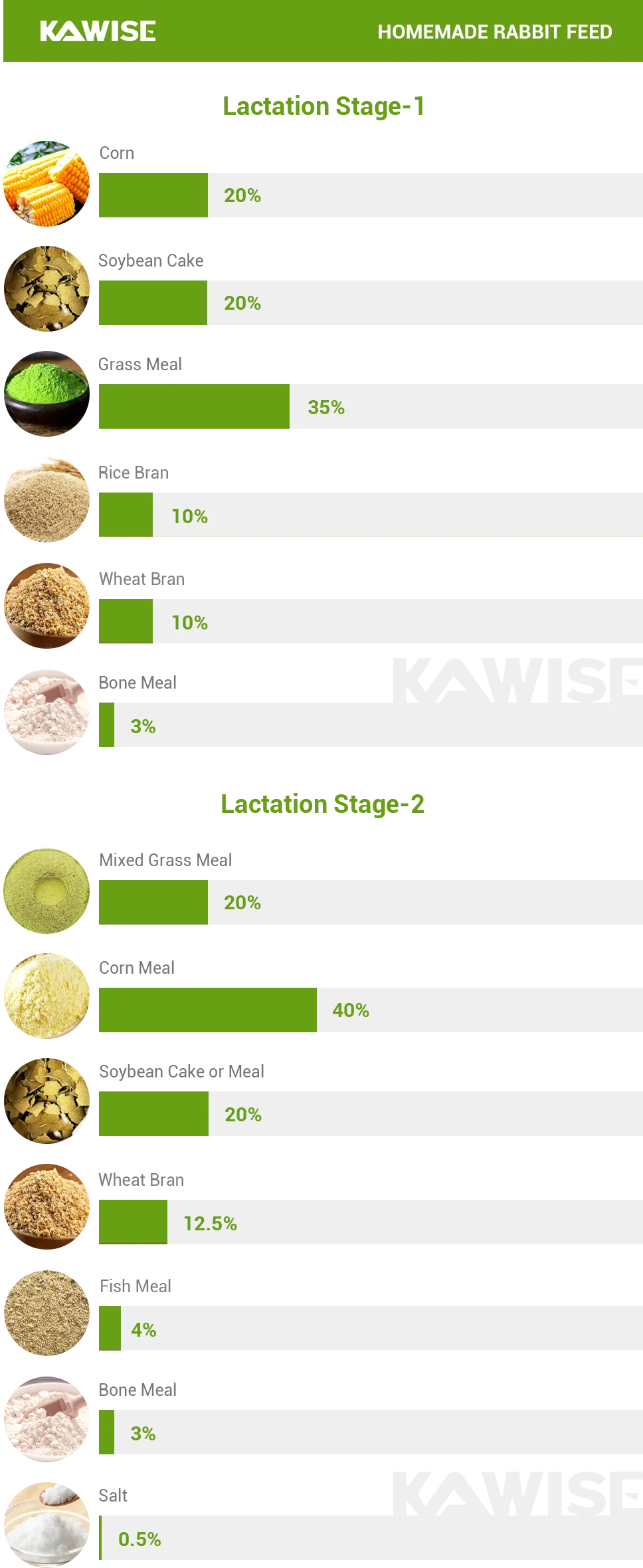
Lactation Stage
Formula 1
Corn 20%, Soybean cake 20%, Grass meal 35%, Rice bran 10%, Wheat bran 10%, Bone meal 3%
Formula 2
Mixed grass meal 20%, Corn meal 40%, Soybean cake or meal 20%, Wheat bran 12.5%, Fish meal 4%, Bone meal 3%, Salt 0.5%
Lactation tip: adding three to five cleaned and cooked earthworms mixed into green forage can help supply high quality animal protein and support milk production.
d. Adult and Fattening Stage
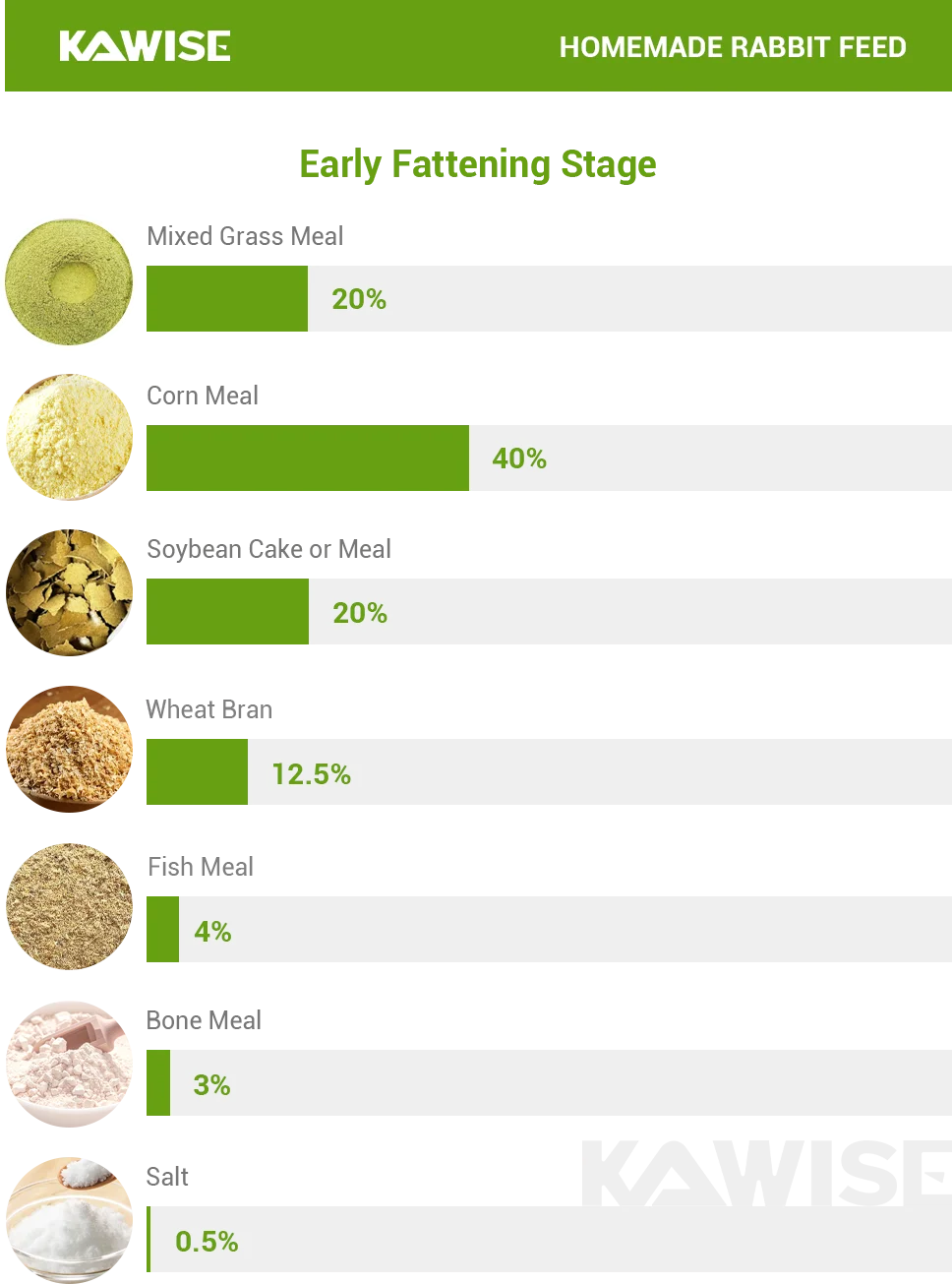
Early Fattening Stage
Mixed grass meal 20%, Corn meal 40%, Soybean cake or meal 20%, Wheat bran 12.5%, Fish meal 4%, Bone meal 3%, Salt 0.5%
Per ton of feed, add: Vitamin premix 200 g, Choline chloride 400 g, Ferrous sulfate 100 g, Copper sulfate 10 g
Late Fattening Stage
Formula 1
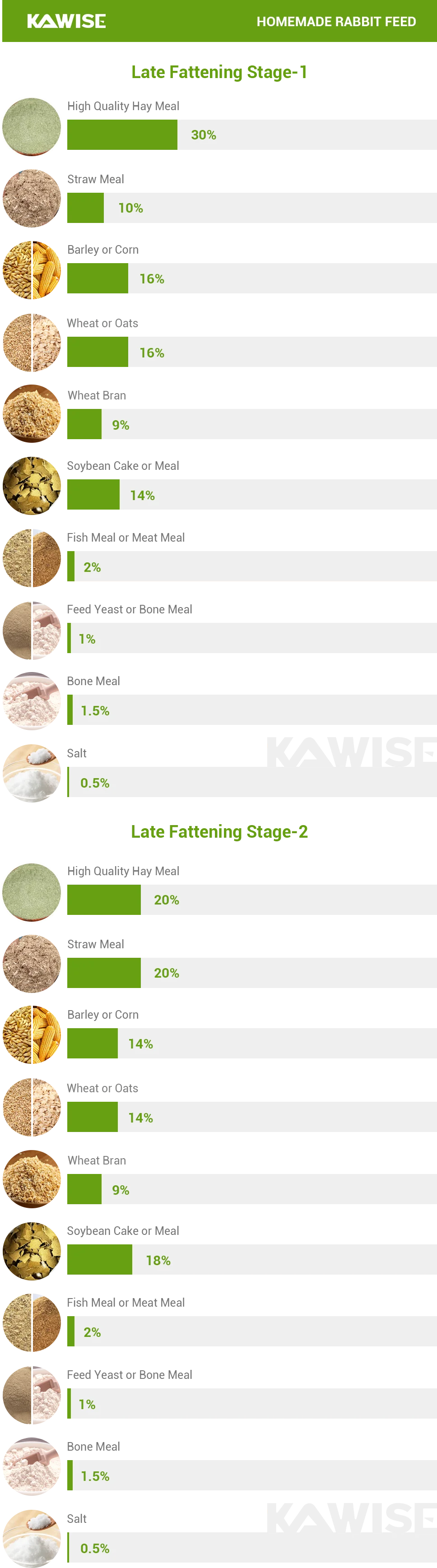
High quality hay meal 30%, Straw meal 10%, Barley or corn 16%, Wheat or oats 16%, Wheat bran 9%, Soybean cake or meal 14%, Fish meal or meat meal 2% crude protein 55%–65%, Feed yeast or bone meal 1%, Bone meal 1.5%, Salt 0.5%
Formula 2
High quality hay meal 20%, Straw meal 20%, Barley or corn 14%, Wheat or oats 14%, Wheat bran 9%, Soybean cake or meal 18%, Fish meal or meat meal 2% crude protein 55%–65%, Feed yeast or bone meal 1%, Bone meal 1.5%, Salt 0.5%
Common Alternative Ingredients
Some feed materials may be hard to supply consistently due to region or season. The following alternatives can be used as references.
- Soybean cake or soybean meal → rapeseed meal, cottonseed meal, flaxseed cake ( These must be boiled or heat treated before feeding )
- Corn → wheat, sorghum, oats, distillers grains( Monitor carefully to avoid salt related issues )
- Grass meal or dried forage → alfalfa hay meal, timothy grass meal, oat hay meal, pasture grass meal
- Bone meal → dicalcium phosphate DCP or diammonium phosphate DAP
Low cost materials such as soybean leaves, peanut vines, wheat straw, and dried rice straw can be fed after simple processing.
Tree leaves including locust, poplar, mulberry, birch, elm, linden, and apple leaves are rich in trace minerals and well accepted by rabbits. When dried and ground, they help digestion and support milk production.
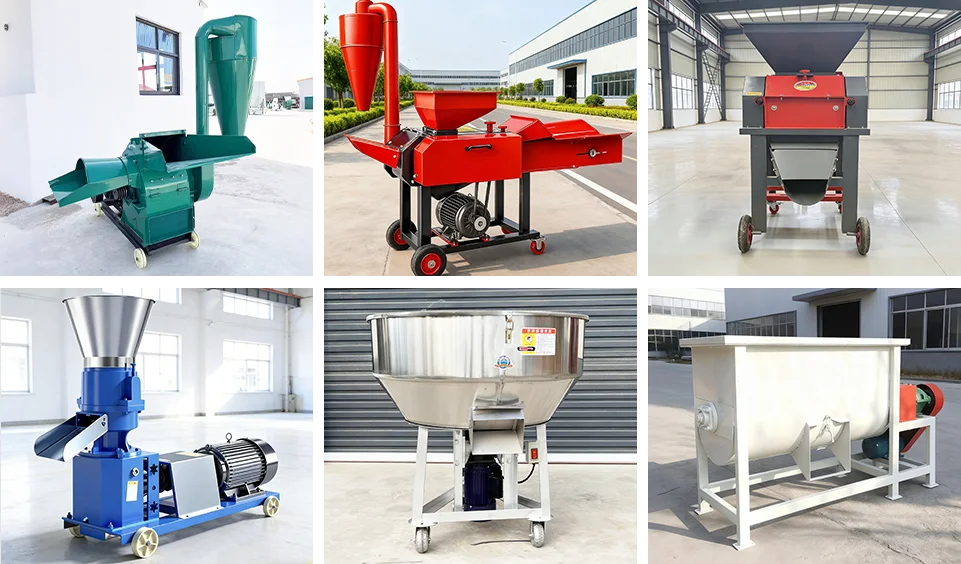
We also supply grinding and processing equipment for efficient rabbit feed preparation.
Common Feed Mixing Mistakes
In practice, some farmers rely mainly on experience when mixing feed and lack systematic adjustment. This often leads to mismatches with rabbits' actual nutritional needs.
Feeding a single ingredient or formula
Long term use of one ingredient or one fixed formula can cause nutrient imbalance.
Different breeds, ages, and production purposes require different energy, protein, and fiber levels. A balanced and stable complete feed works better in practice.
Too much concentrate, not enough forage
Rabbits are herbivores, and forage is essential for gut health.
Overfeeding concentrates to push short term weight gain raises feed cost and increases digestive stress, which can lead to intestinal problems.
Overuse of drug additives
Some farms add antibiotics or medicated additives to feed for long periods to prevent disease.
Improper or long-term use can cause drug resistance, make disease control harder, and harm long term herd health.
A proper rabbit feed formula is essential for growth performance and overall health.
In practice, formulas should be adjusted by growth stage, season, and health condition.
The formulation ideas and common issues outlined here aim to provide practical support for daily feeding.
Need Some Help?
Contact us quickly and we will reply you within 24 hours. We will not disclose your information.