
 Online Contact
 Send Message
How to Choose the Right Feed Pellets for Rabbits
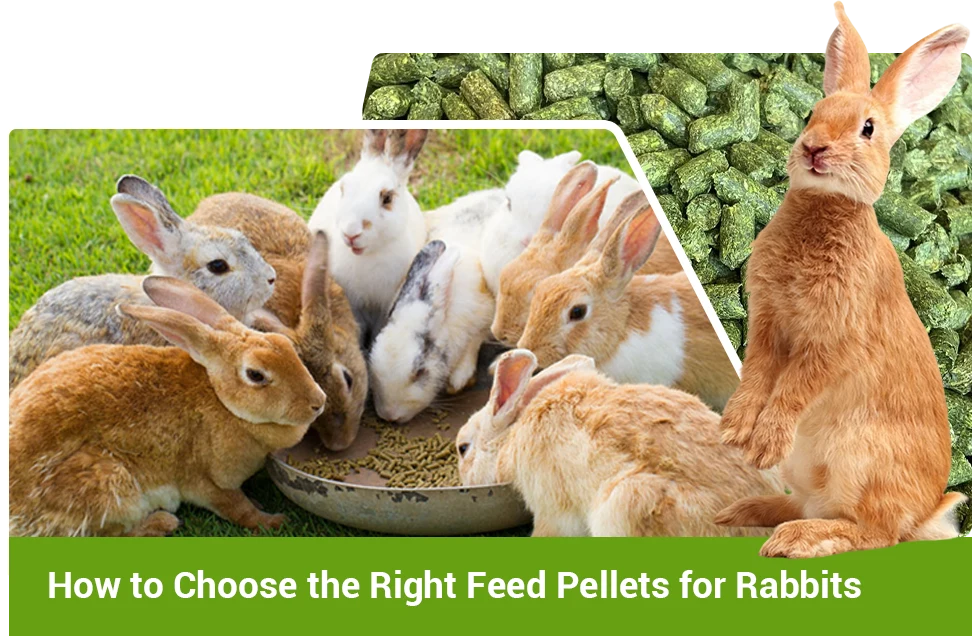
Ingredient composition and processing methods shape how rabbit feed pellets perform in daily feeding. Pellets with similar labels can behave very differently over time. What matters most is how those differences affect real feeding results.
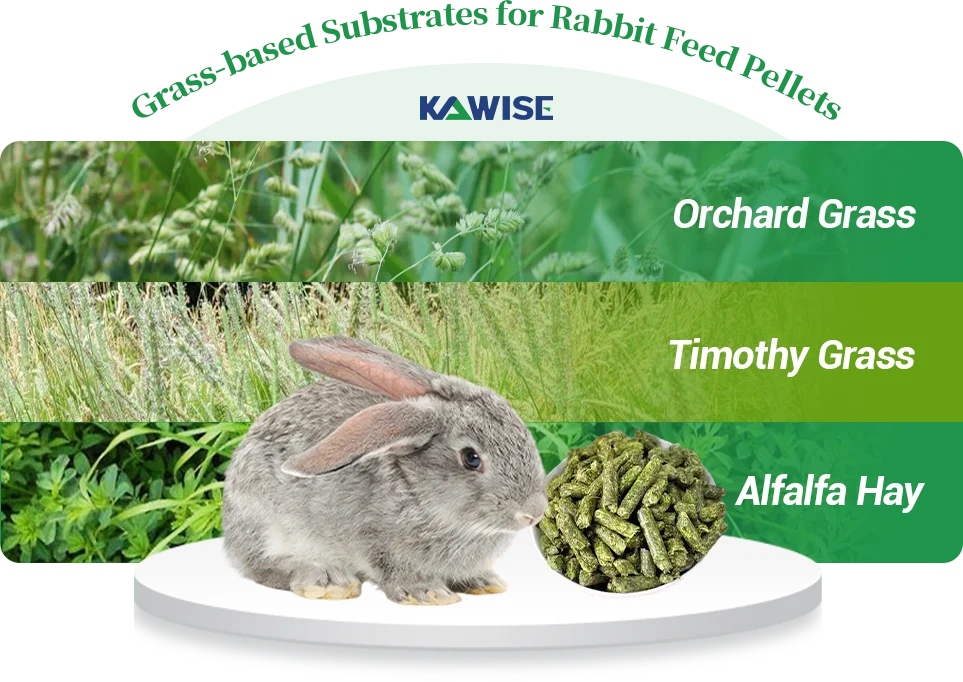
Common commercial pellets forage sources
Rabbits need a consistent source of fiber to support digestion and dental health. Forage based ingredients are the core of most rabbit feed pellets.
Knowing the forage base makes it easier to judge which pellets fit different growth stages and daily feeding needs.
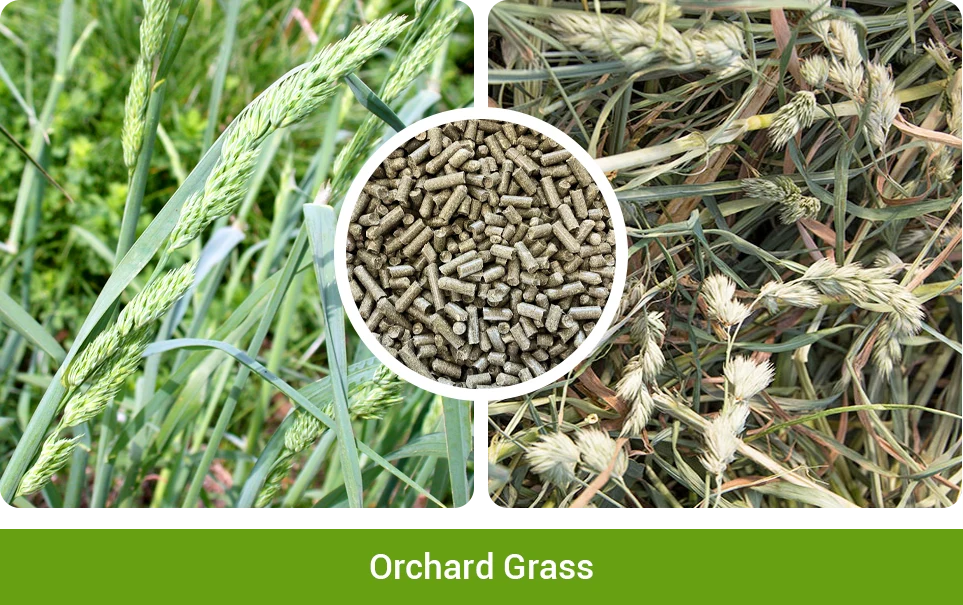
Orchard Grass
Orchard grass is a safe and palatable forage commonly used as a long term fiber source. Rabbit pellets based on orchard grass are typically positioned as maintenance pellets for daily feeding.
Suitable for
- Adult rabbits in long term daily feeding.
- Stable feeding stages with moderate nutritional needs.
- Situations where energy intake needs control and digestive stability are a priority.
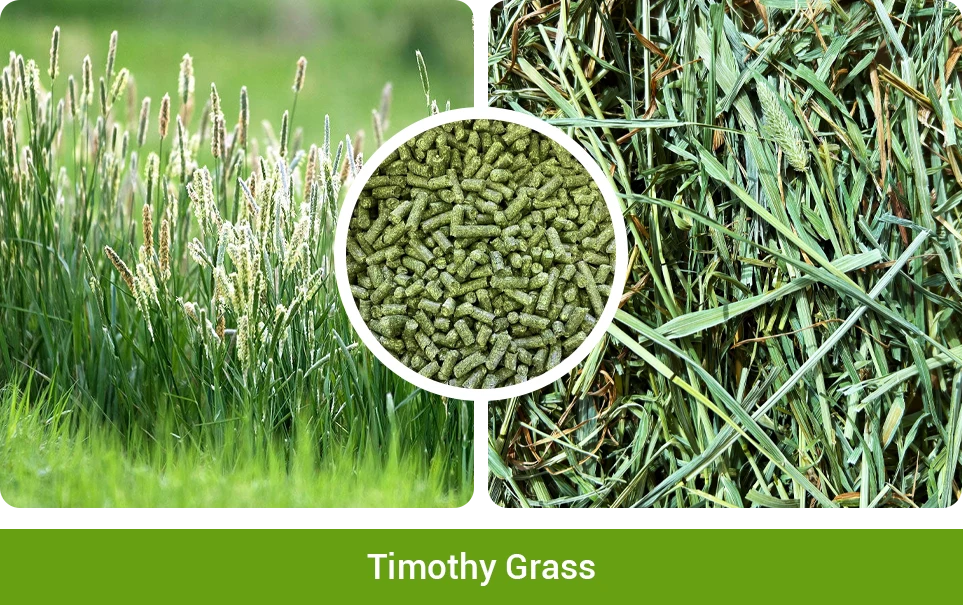
Timothy Grass
Timothy grass is one of the most widely used forage ingredients in rabbit feed, commonly found in both pellet and hay forms. Pellets based on timothy grass are often considered general purpose forage pellets.
Suitable for
- Adult rabbits or rabbits that have completed their growth stage
- Feeding programs that require steady fiber intake without excess nutrition
- Long term free feeding or semi free feeding systems
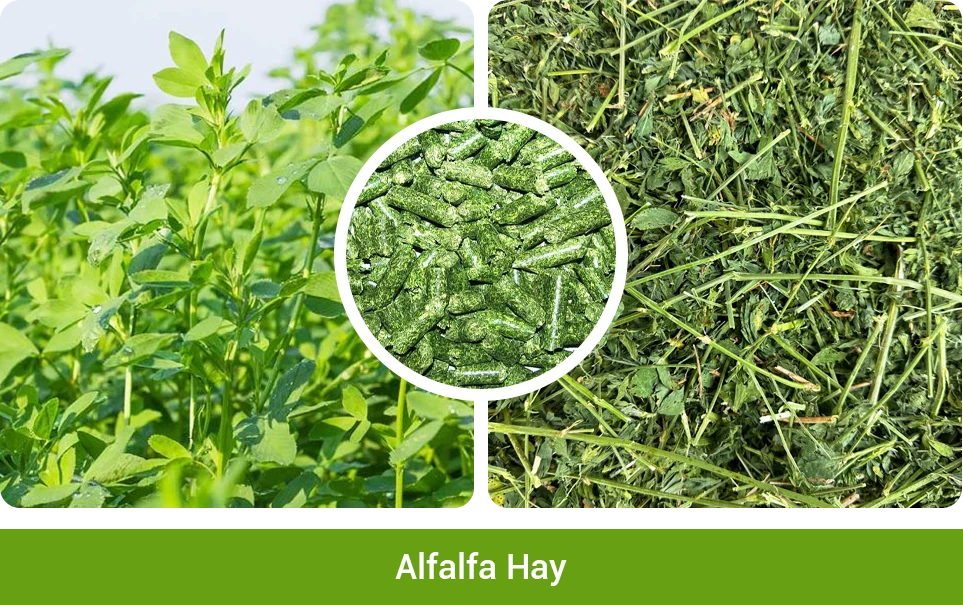
Alfalfa Hay
Alfalfa hay is a high nutrient forage with significantly higher protein and calcium levels than orchard grass or timothy grass. It is typically used for specific growth stages or targeted feeding needs.
Suitable for
- Young rabbits or rabbits in rapid growth stages
- Growing phases with higher protein and calcium requirements
- Use as a functional supplement rather than for free feeding
Alfalfa pellets are not suitable for long term free feeding for all rabbits. In most cases they are used in limited amounts and combined with other forage-based feeds.
How to read a feed formula label
Many commercial rabbit pellets are marketed to pet owners rather than designed around precise nutritional needs. Packaging terms like natural or healthy and claims that a product suits all life stages often do not reflect actual formula quality.

Some products emphasize added vitamins or minerals while overlooking the base ingredient structure. Others include dried fruit or seeds to improve appearance, with limited attention given to key factors such as fiber content.
Quick checks for a feed formula
- Ingredient order shows the base of the pellet. Forage listed first usually means a forage-based formula.
- Adult daily pellets should be high in fiber, often 18 percent or more.
- Protein should match the life stage. Most adult rabbits suit 12 to 14 percent, while higher levels fit growth stages.
- Fat vitamins and minerals are supporting details, not the main criteria.
How much to feed a rabbit
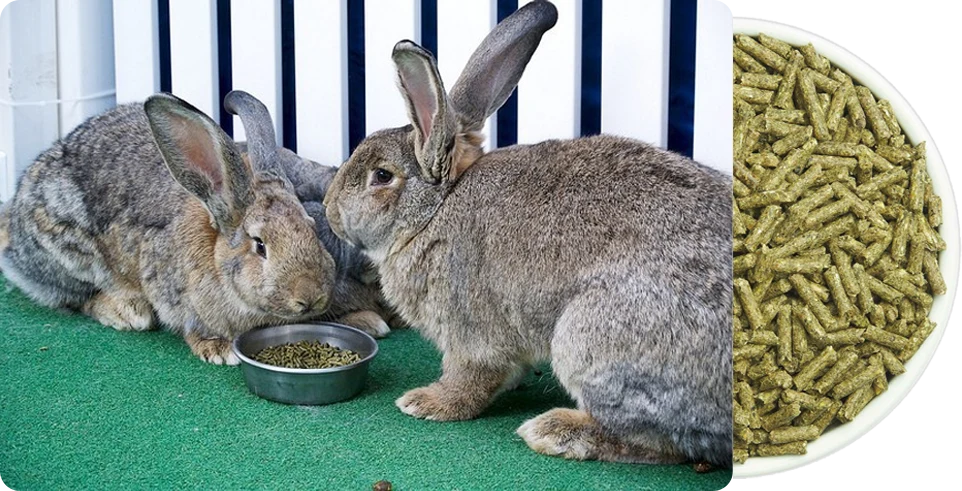
The table below summarizes common feeding practices shared within rabbit keeping communities and is for reference only.
Actual pellet amounts should be adjusted based on the pellet formula fiber level and the rabbit's body condition. Hay should always be available free choice.
| Rabbit Weight (lbs / kg) | Daily Pellet Amount* |
| 2 lbs / ≈ 0.9 kg | 2 tbsp |
| 3 lbs / ≈ 1.4 kg | 3 tbsp |
| 4 lbs / ≈ 1.8 kg | 1/4 cup |
| 5 lbs / ≈ 2.3 kg | 1/4 cup + 1 tbsp |
| 6 lbs / ≈ 2.7 kg | 1/4 cup + 2 tbsp |
| 7 lbs / ≈ 3.2 kg | 1/4 cup + 3 tbsp |
| 8 lbs / ≈ 3.6 kg | 1/2 cup |
| 9 lbs / ≈ 4.1 kg | 1/2 cup + 1 tbsp |
| 10 lbs / ≈ 4.5 kg | 1/2 cup + 2 tbsp |
Notes
1 cup ≈ 240 ml and 1 tbsp ≈ 15 ml. ( Weights are approximate, based on 1 lb ≈ 0.45 kg )
A common guideline is feeding pellets at 3-5% of body weight. Actual amounts should be adjusted based on pellet formula, fiber level, and the rabbit's condition.
Cold pressed vs extruded pellets
Commercial rabbit pellets are mainly available as cold pressed pellets or extruded pellets.
The two differ in processing methods. Cold pressed pellets are formed by mechanical compression, while extruded pellets are produced through high temperature extrusion.
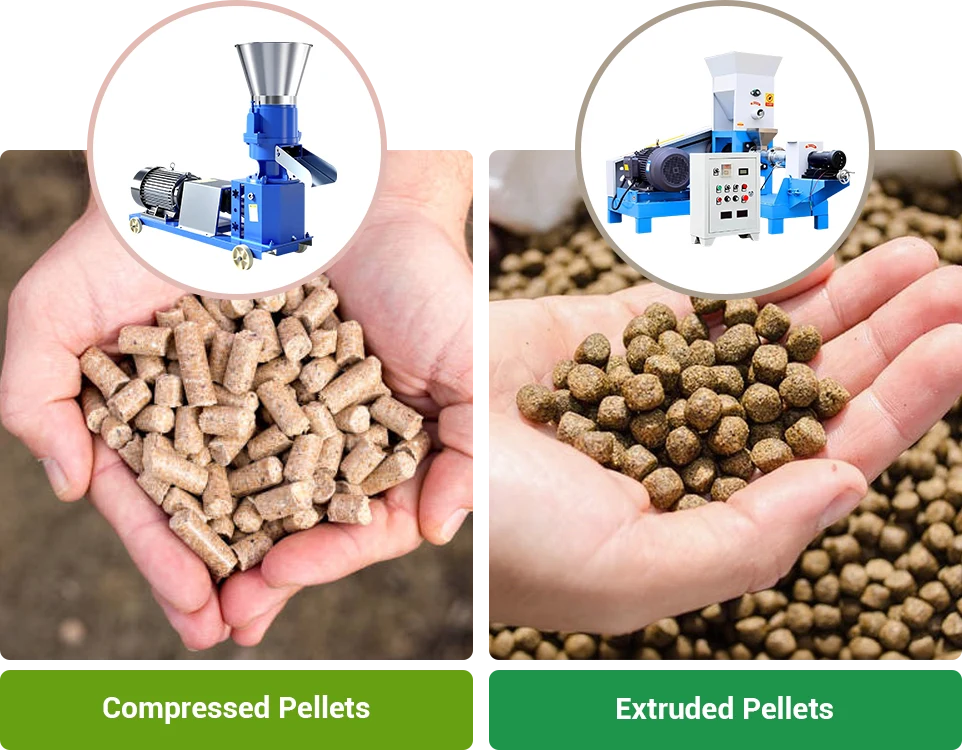
Different processing methods also lead to differences in practical performance. The key comparisons are shown in the table below.
| Key Factor | Cold Pressed | Extruded |
| Fiber structure | Mostly retained | Reprocessed |
| Palatability | Moderate | Higher |
| Digestive response | More stable | More variable |
| Typical use | Adult maintenance | Growth or special needs |
| Cost | Lower | Higher |
For daily feeding, cold pressed pellets are easier to manage when long term stability is the goal. Extruded pellets are better used short term for specific stages or needs.
Make your own rabbit feed pellets
If long term stability and feed costs are your focus, making your own pellets can be a smart option. It allows greater control over formulas and ingredient choices.
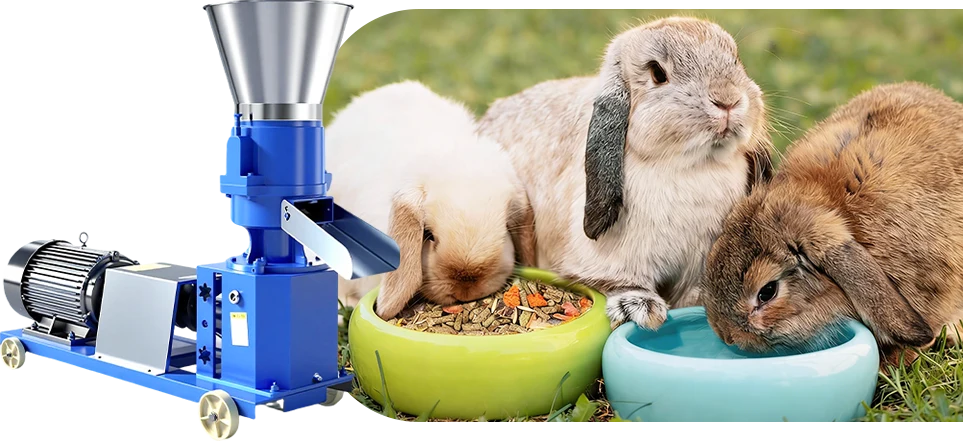
By making your own feed, you can adjust fiber, protein, and energy levels to match growth stage, stocking density, and local ingredients, while keeping long term feed costs under better control.
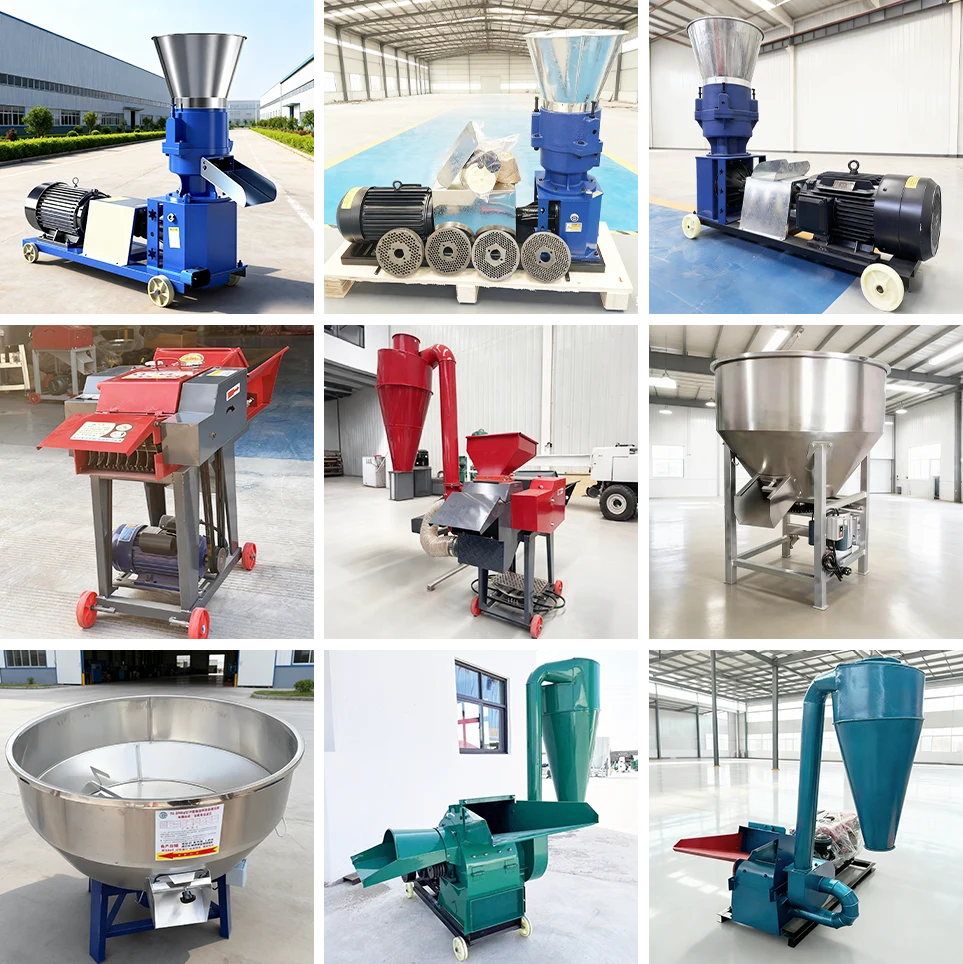
If you plan to make rabbit feed pellets yourself, the right equipment matters.
We provide pellet mills, chaff cutters, and mixers to support forage preparation and pellet production for different farm sizes. Feel free to contact us if needed.

Need Some Help?
Contact us quickly and we will reply you within 24 hours. We will not disclose your information.