
 Online Contact
 Send Message
Feed Hammer Mill Operation and Maintenance Manual
File Download
Get the full operation manual in PDF format.
Product Overview
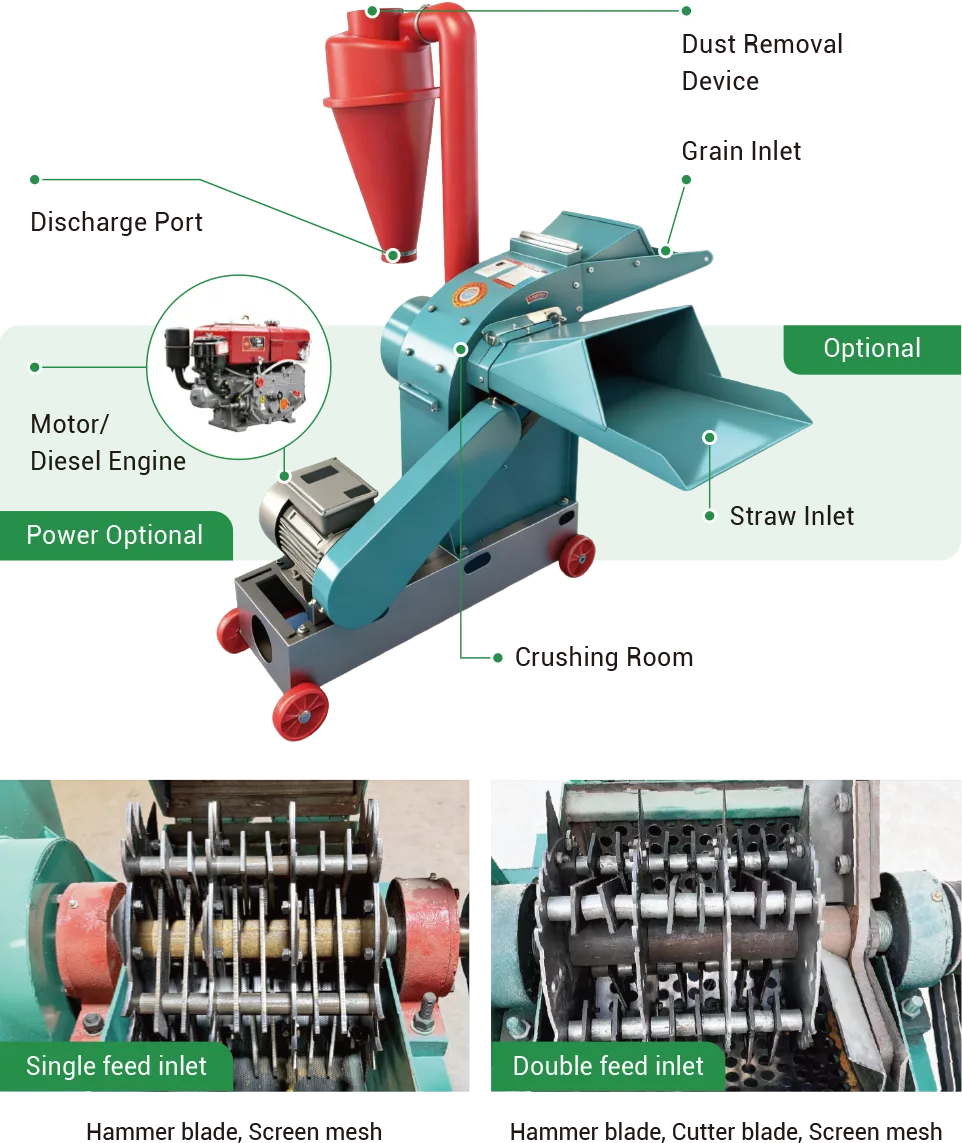
The hammer mill is used for grinding grain, forage, and agricultural materials such as corn, beans, wheat straw, and rice straw. It supports single inlet and double inlet models, with electric motor or diesel engine options.
The machine crushes materials through high speed hammer impact. The final particle size can be adjusted by changing screens. It is easy to operate, simple to maintain, and suitable for feed processing, grain grinding, and farm material crushing.
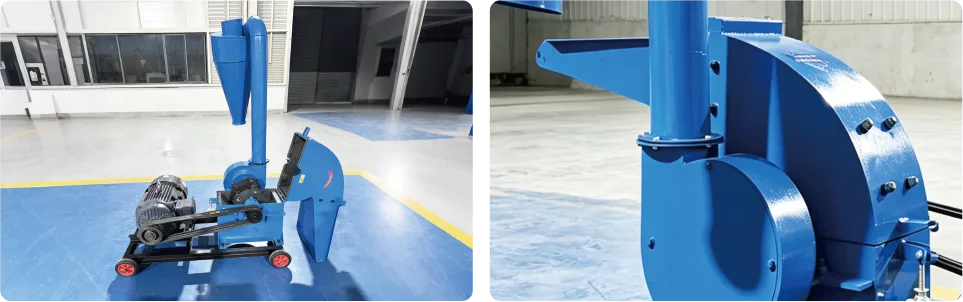
Equipment Structure Display
First Operation Procedure
Motor Wiring / Diesel Engine Starting
Ensure the motor power cable is connected correctly, and the fuel system & starting mode of the diesel engine comply with the equipment operation requirements.
Electric Motor Version: Connect to a stable power supply (220V single-phase or 380V three-phase).Before power connection, confirm the power cable and ground wire are properly installed, and complete wiring in accordance with motor wiring specifications.
More details: Single And Three Phase Motor Wiring and Protection Guide
Diesel Engine Version: Fill with sufficient diesel fuel and check the fuel system for no leakage before starting.
More details: Diesel Engine Pellet Mill Startup and Maintenance Guide
Ensure Correct Motor Rotation Direction
Before startup, check whether the rotation direction of the motor main shaft conforms to the design mark near the pulley.Normally, the motor shall rotate counterclockwise, and the rotation direction shall be consistent with the feeding direction of the main inlet.
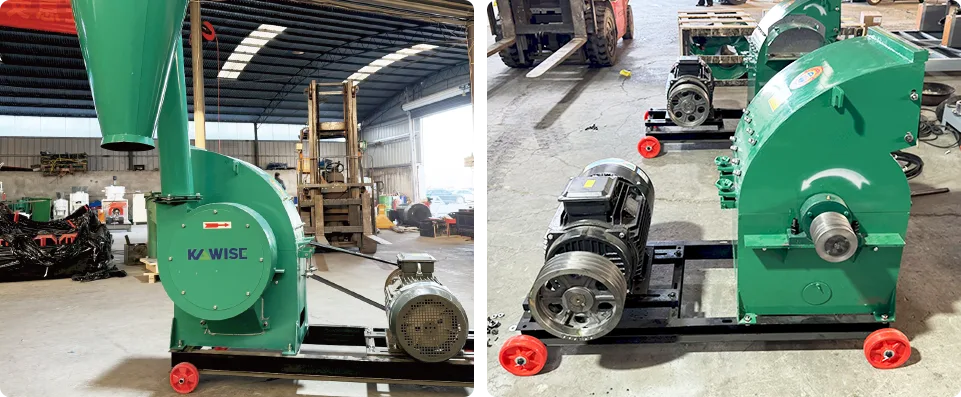
Wrong rotation direction will cause abnormal operation, equipment damage and even personal injury. It is recommended to run the motor no-load for the first time to confirm the correct rotation direction before formal operation.
Component Installation
Some components are disassembled before delivery for transportation purposes. Please assemble the components according to the structural drawing and the following operation steps
Screen Mesh
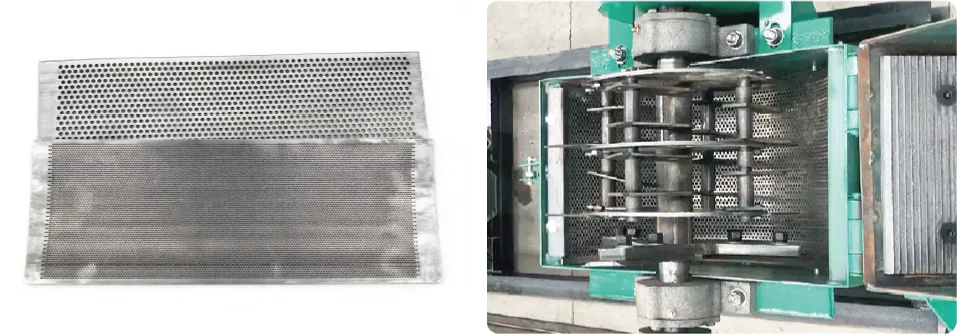
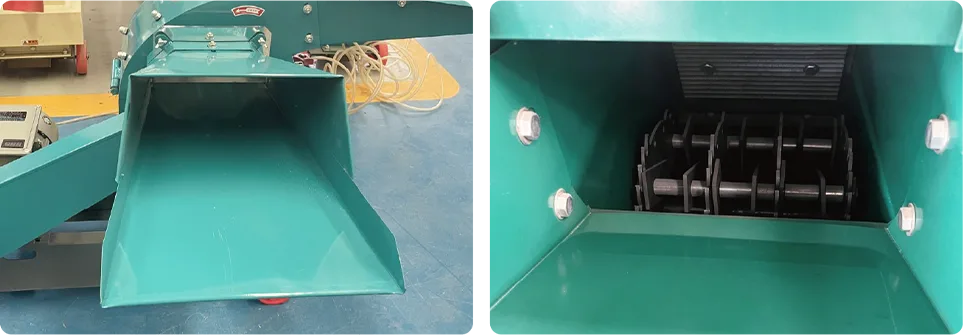
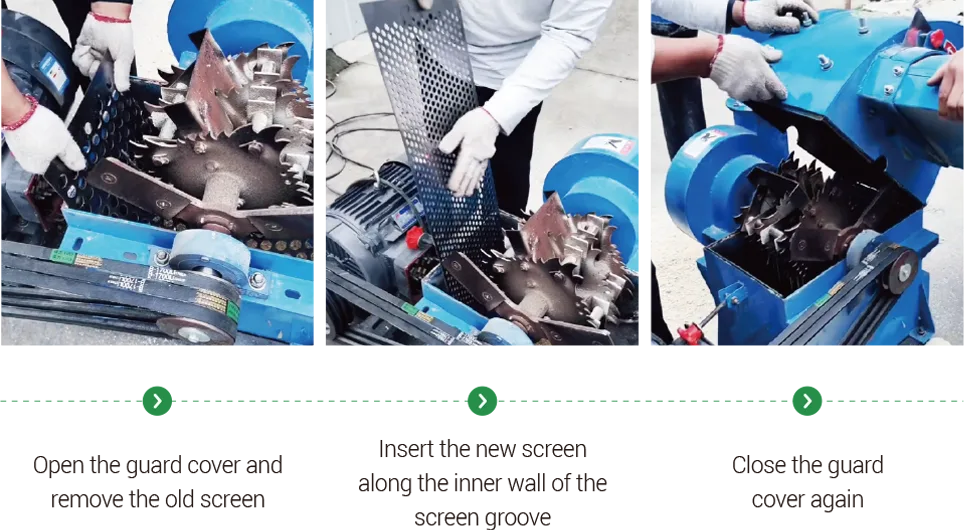
Select the appropriate screen model, place the screen correctly into the screen groove of the machine. Ensure a tight fit without gaps and fix it firmly in position.
Dust Removal Device Installation
Position the dust removal device according to the structural drawing, connect it to the equipment interface, and fasten with bolts. Ensure tight connection to prevent looseness and air leakage.
Feed Hopper
Align the feed hopper with the machine inlet as shown in the structural drawing, then fasten it securely with bolts.
Operation for Different Materials
Grain Crushing Operation
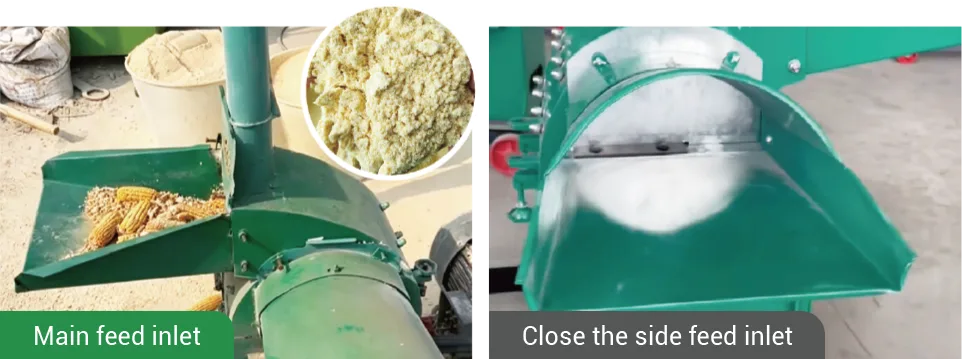
Use the main feed inlet when crushing grains. Adjust the shifting plate to a proper position to ensure smooth feeding and prevent material splashing during crushing.
For double-feed inlet models, close the baffle of the side feed inlet during crushing to avoid material splashing.
Forage Crushing Operation (Only for double-inlet model)
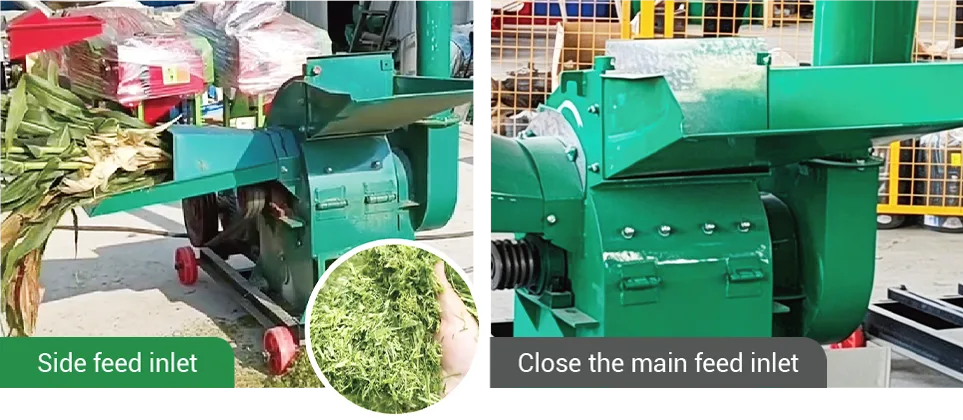
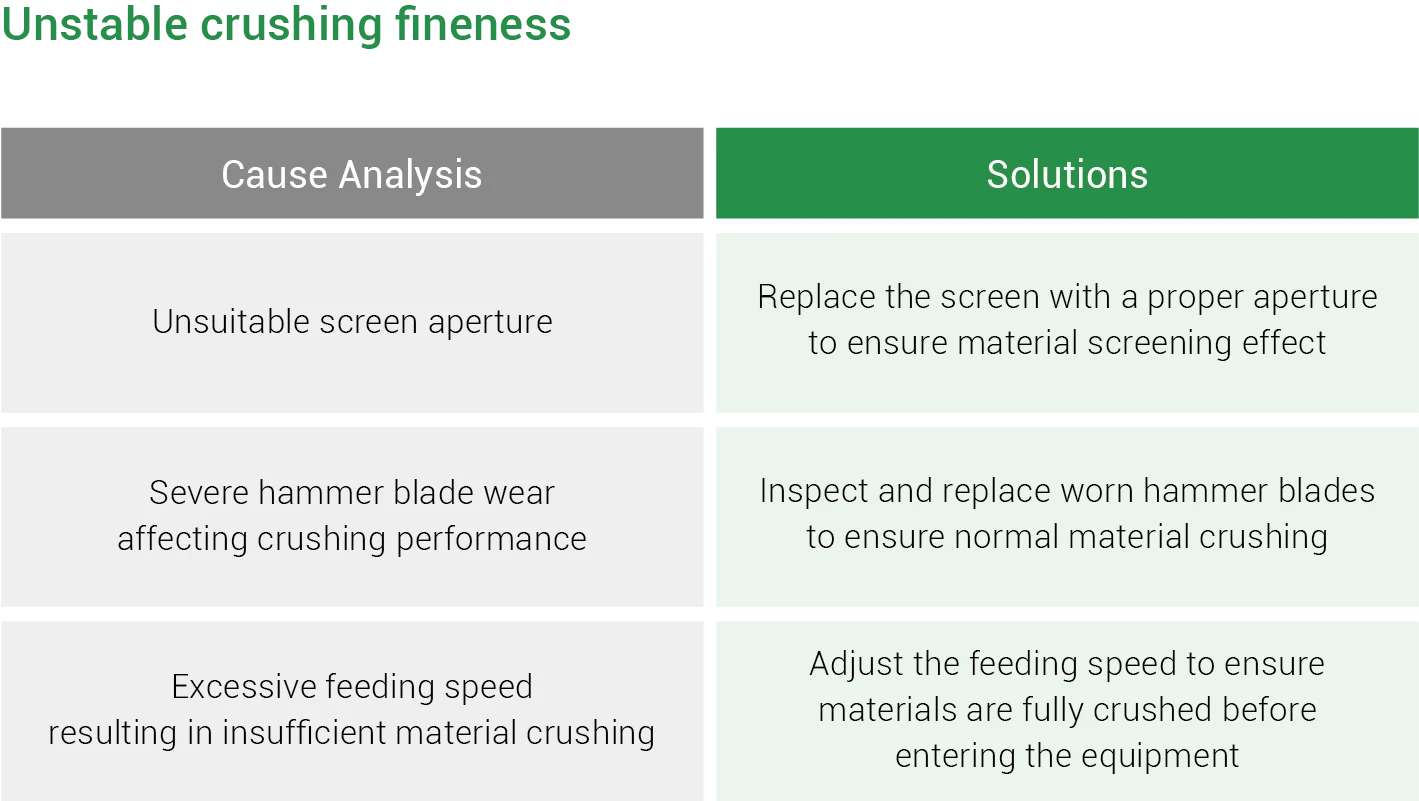
For double-inlet models when crushing high-moisture materials such as green straw and grass, cover the main feed inlet with a baffle to avoid adhesion and accumulation of wet materials, and prevent material splashing during operation. Control the feeding speed during feeding to ensure crushing uniformity and working efficiency
To ensure safe operation of the equipment, do not use both feed inlets at the same time during operation.
Equipment Maintenance
Make sure all the following operations are carried out when the equipment is completely stopped.
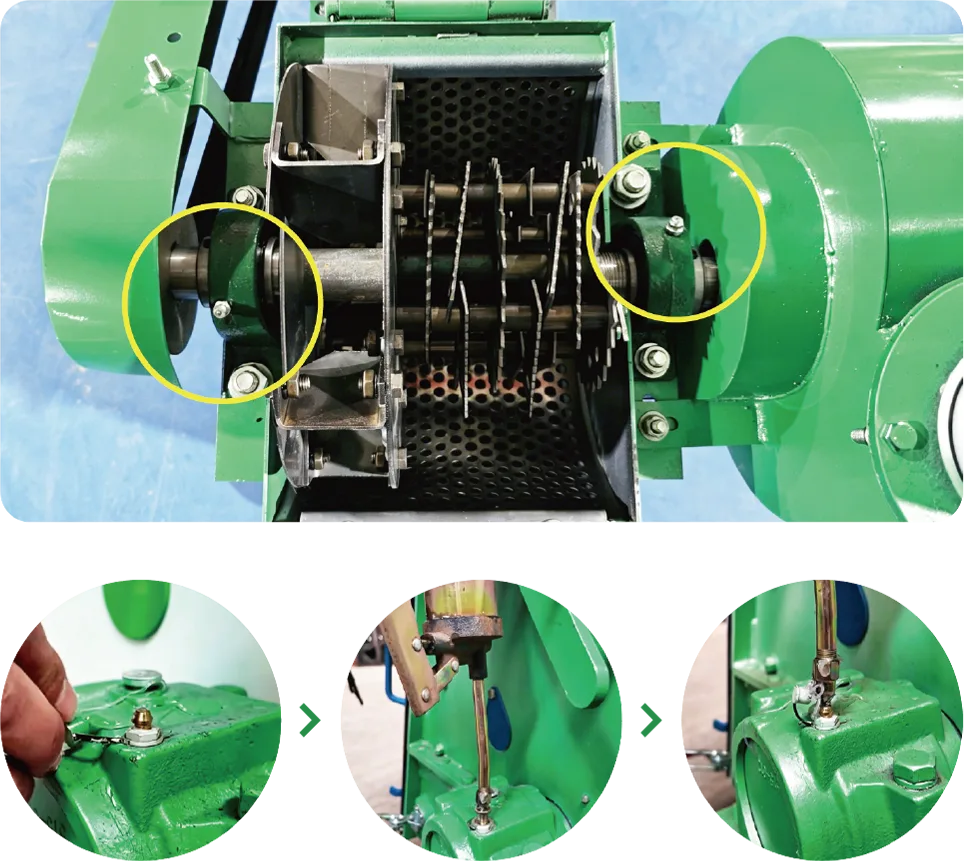
Bearing Lubrication
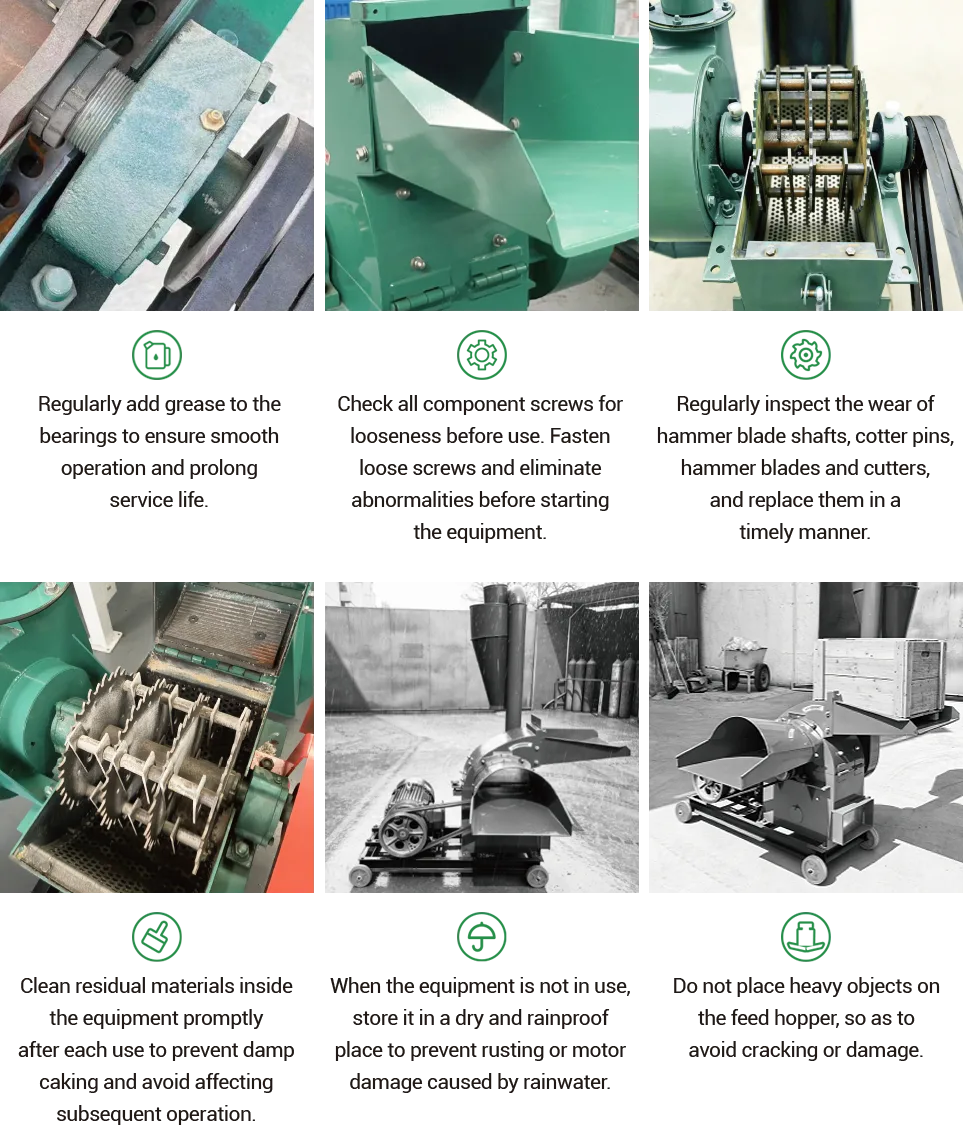
Maintain the bearing during initial use and regular maintenance. Add an appropriate amount of grease at the position shown in the diagram to ensure smooth operation of the bearing and prolong its service life.
Hammer Blade Replacement
- Before operation, ensure the equipment is powered off and completely stopped. Remove the cotter pins on both sides of the hammer blade shaft, then take off the old hammer blades.
- Install and fix new hammer blades one by one with the sleeve in a staggered arrange ment. Make sure each hammer blade is correctly positioned and firmly mounted.
- After installation, refasten the cotter pins. Start the equipment for trial operation, check whether the hammer blades run normally, and ensure there is no abnormal vibration or noise.

When replacing hammer blades, ensure the quantity on the cutter disc is consistent (complete set replacement is recommended).
If the weight deviation between hammer blade shafts exceeds 3 grams, it will cause center of gravity offset, increase machine vibration, and even damage bearings and other components
Cutter Blade Replacement
Triangular blades must be installed in a diagonally symmetrical arrangement. Ensure the number and position of diagonally installed blades are symmetrical to avoid weight imbalance, which would cause center of gravity offset during operation, increase centrifugal force, and result in machine vibration.
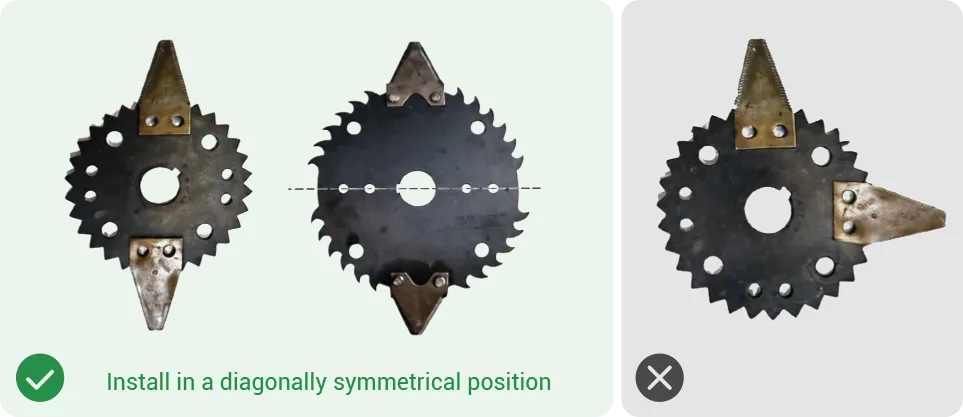
Do not install hammer blades inside the screws of triangular blades; otherwise, the hammer blades cannot rotate freely, which may cause machine jamming and vibration
When crushing hard materials such as corn cobs, corn ears and branches, remove the triangular blades to prevent damage to the blade serrations and avoid screen damage caused by blades propping against materials.
Screen Replacement
Motor Pulley Installation and Adjustment
First check whether the main engine pulley and the motor pulley are aligned. If not aligned, gently tap the motor pulley with a hammer to make it flush with the motor shaft end; be careful not to strike it too deep.
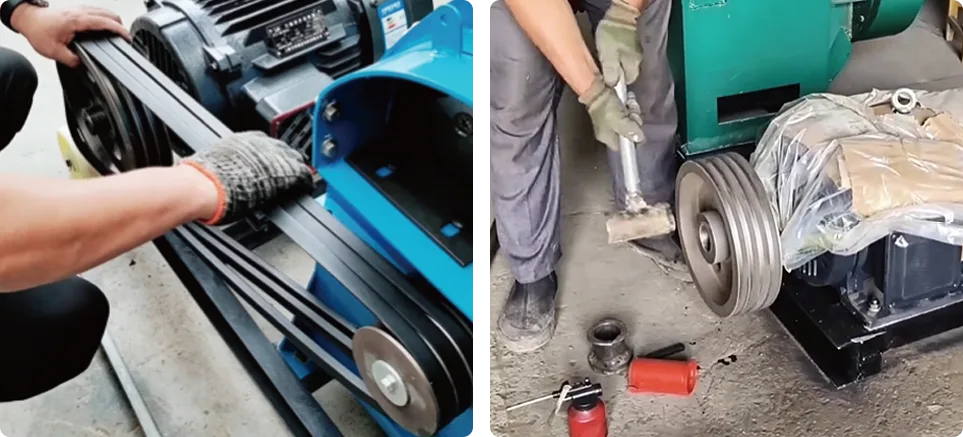
Note: Use tools such as angle iron, iron rod and steel ruler to assist in checking whether the pulleys are parallel. Keep the pulleys parallel to avoid accelerated belt wear or belt falling off caused by misalignment.
Regular Inspection
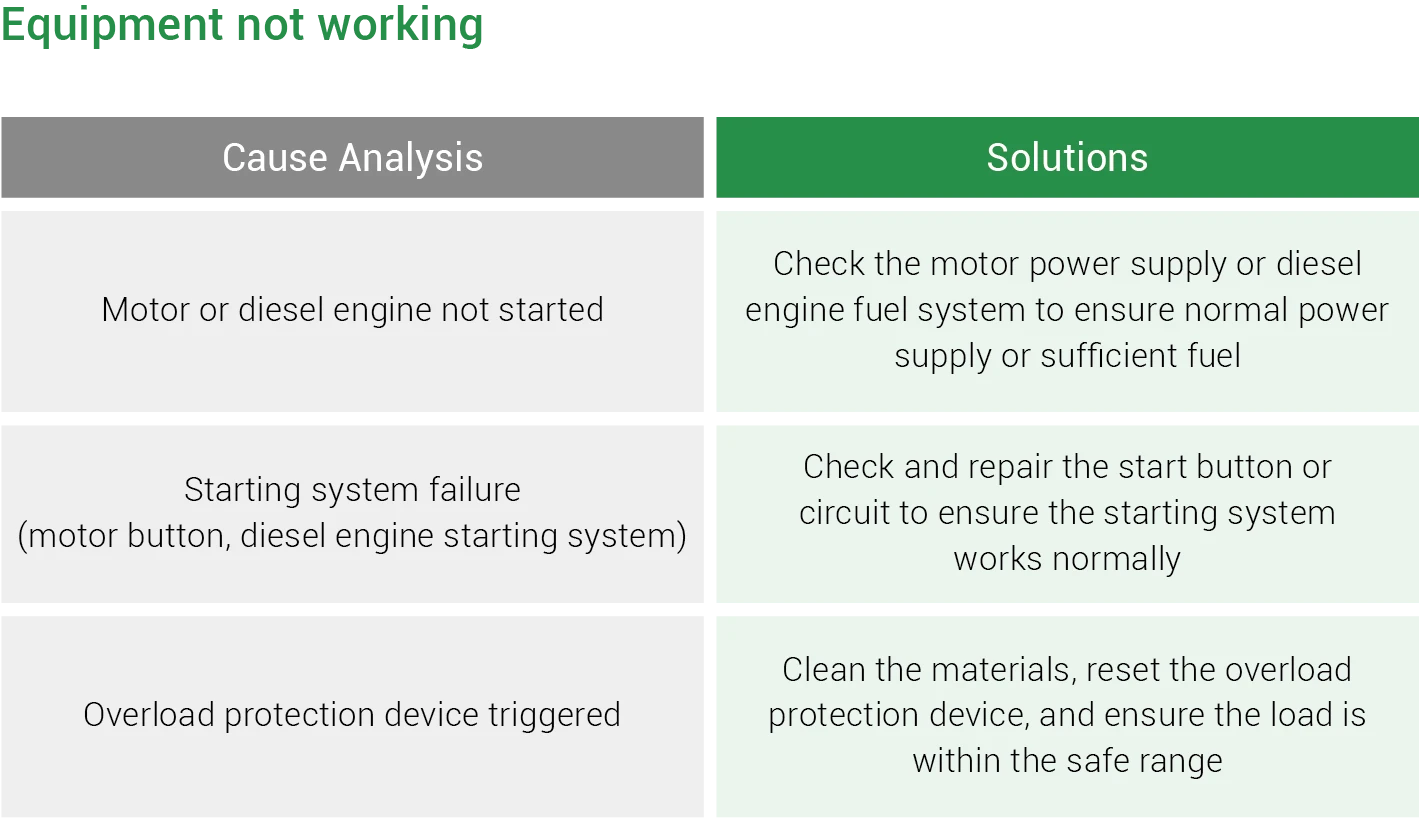
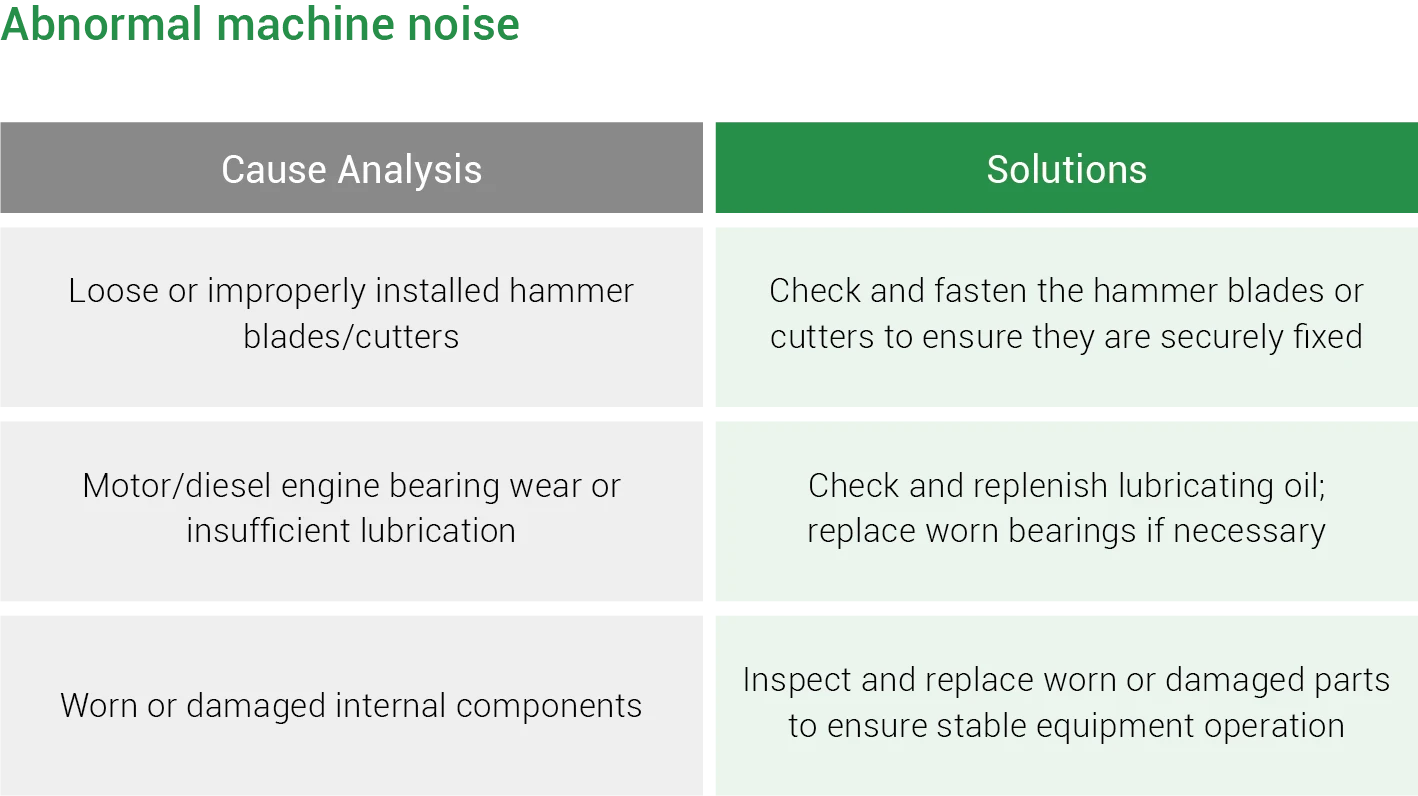
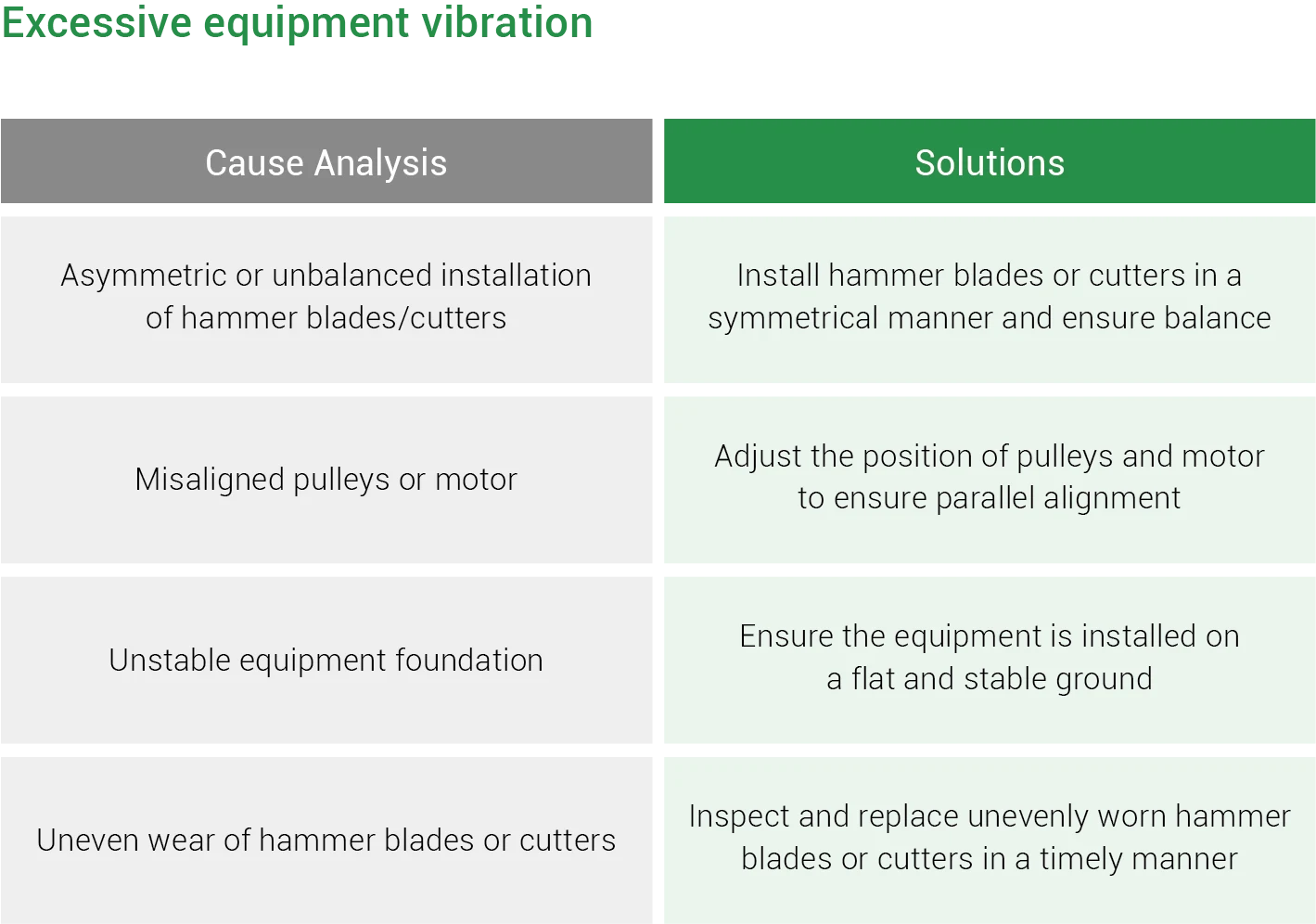
Common Faults and Solutions
Need Some Help?
Contact us quickly and we will reply you within 24 hours. We will not disclose your information.