
 Online Contact
 Send Message
Effects of Rabbit Feed Pellet Characteristics on Feeding and Health
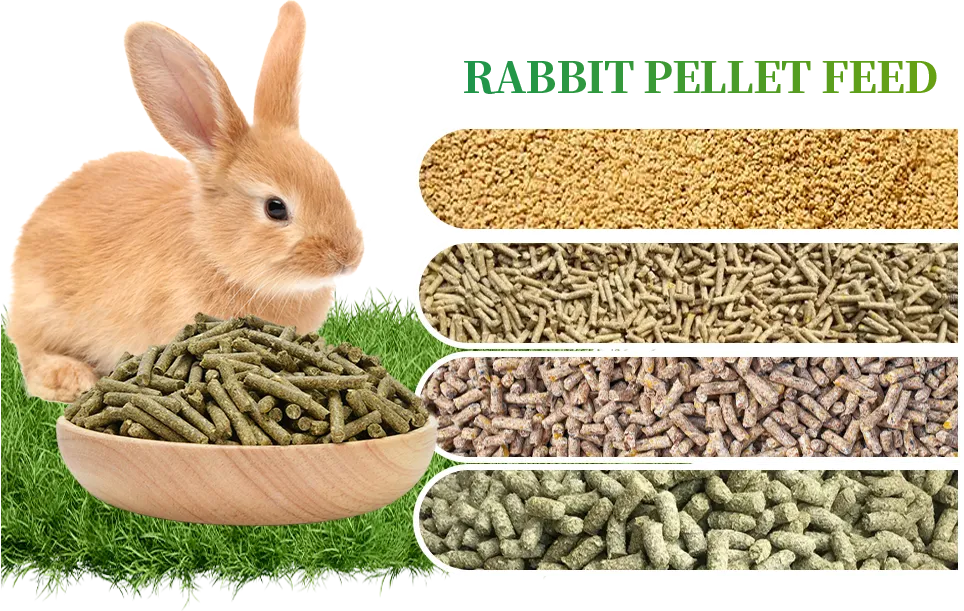
In rabbit farming, feed pellet physical properties directly affect feeding performance and digestive health. Pellet size, shape, hardness, and grinding structure influence feeding stability, feed waste, and gut function. Proper pellet formation often improves feed efficiency more than formula adjustments.
Pellet Diameter and Length
Pellet diameter and length directly affect feeding performance in rabbits and should be adjusted according to growth stage and specific breeds.
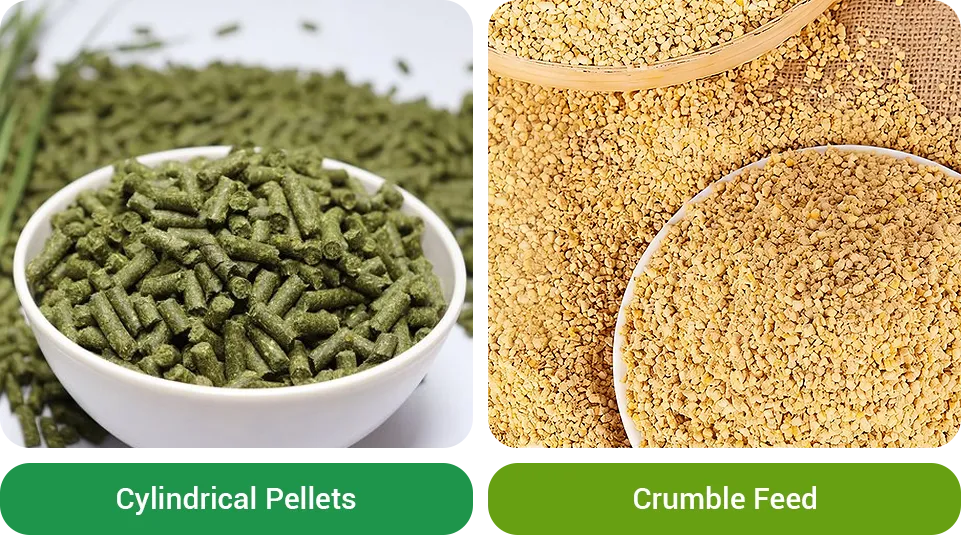
Cylindrical pellets vs Crumble feed
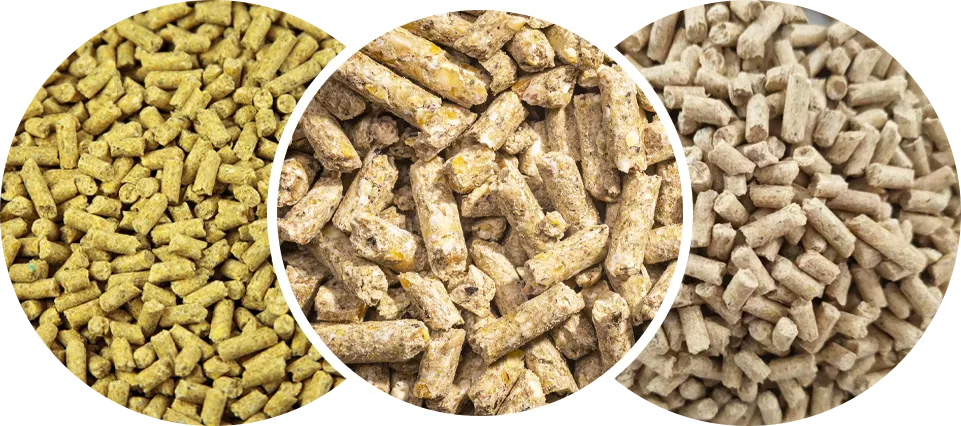
Rabbit feed pellets are mainly supplied as cylindrical pellets or crumble feed. Cylindrical pellets suit stable feeding stages, while crumble feed is easier for young rabbits and is often used during early feeding or transition.
| Item | Cylindrical Pellets | Crumble Feed |
| Pellet form | Uniform shape | Irregular particles |
| Intake by young rabbits | Unstable, easy to drop | Easy to pick up |
| Feed waste | About 12.4% | About 0.7% |
| Growth result | Standard level | About 13% faster |
| Suitable stage | Growing and adult rabbits | Young rabbits 20–50 days |
| Main advantage | Easy handling and storage | Lower early feed waste |
Data based AREEO. Effects of pellet form on feed intake, waste, and growth performance in rabbits.
Pellet Size for Young Rabbits
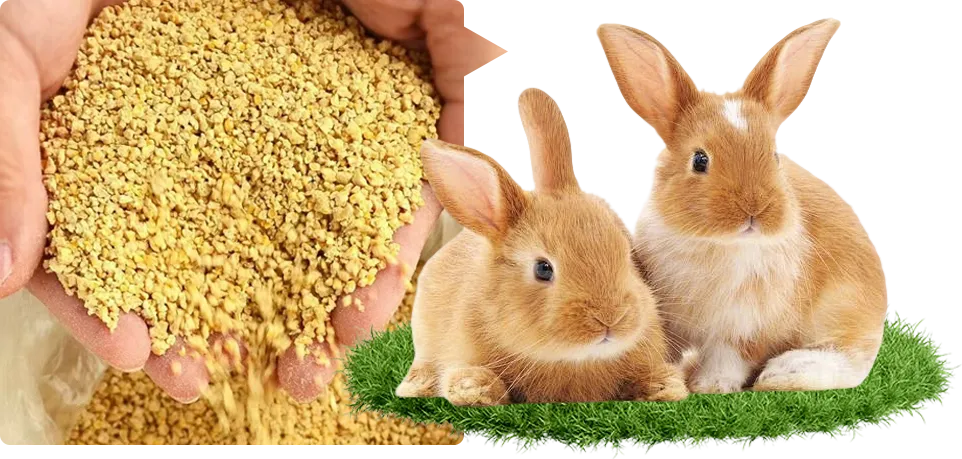
For rabbits aged 20–50 days, standard cylindrical pellets (3–4 mm diameter, 3–6 mm length) tend to slip during feeding, causing higher feed waste. Crumble feed, with irregular shape and rough surface, is better suited for this stage.
Pellet Diameter and Length for Adult Rabbits
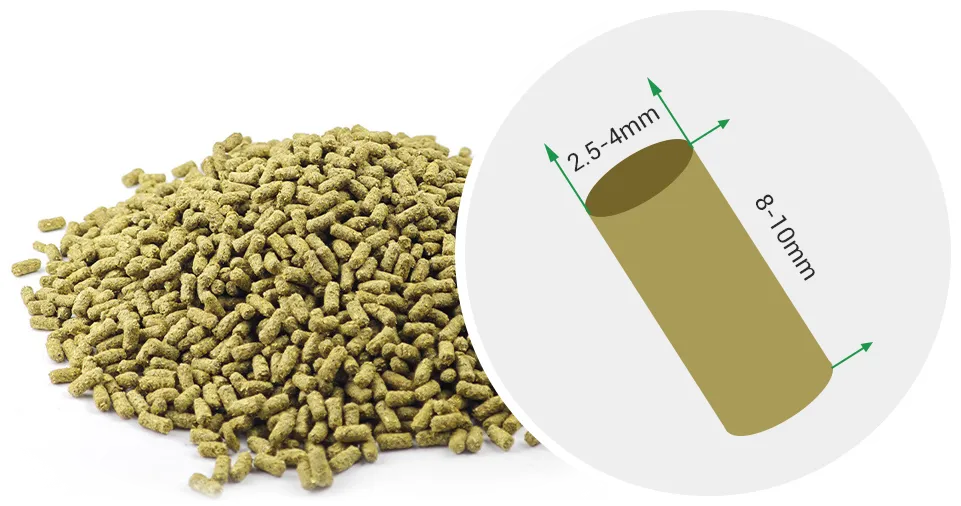
- For adult rabbits, the recommended pellet diameter is 2.5–4.0 mm
- A common pellet length standard is 8–10 mm
Diameters above 5 mm tend to increase feed waste.
Studies on New Zealand White rabbits show that pellet length has no significant effect on feed intake, daily gain, or feed conversion. For specific breeds, adjustments may be needed.
Pellet lengths above 10 mm are more prone to breakage during handling and storage.
Grinding Particle Size
The grinding particle size refers to the material size after milling before pelleting and indirectly affects feeding safety and gut stability in rabbits.
Impact on feeding and growth performance
Moderate grinding improves digestibility, but during the fattening stage it does not directly affect growth performance. Within a normal range, particle size shows no clear impact on daily gain, feed conversion, or dressing rate in rabbits.
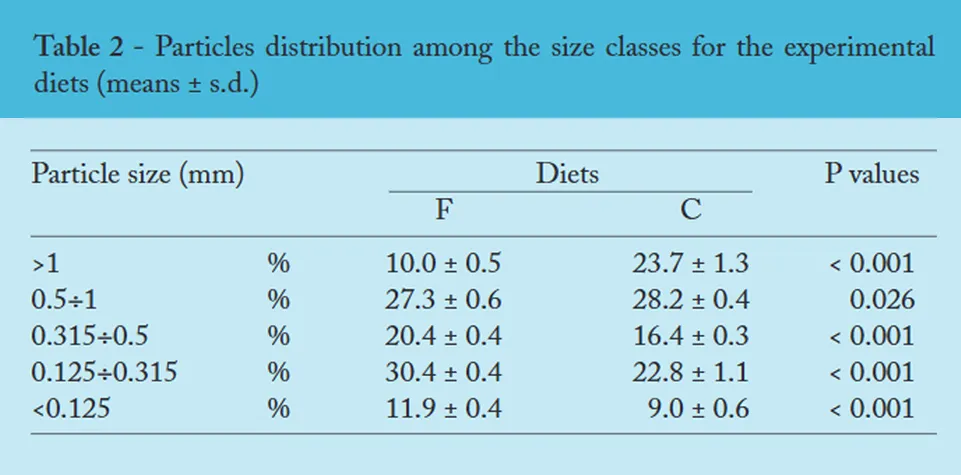
This indicates that particle size plays a limited role in growth performance compared with diet structure and nutrient balance, if it remains within a reasonable range.
Effects on gut digestion and health
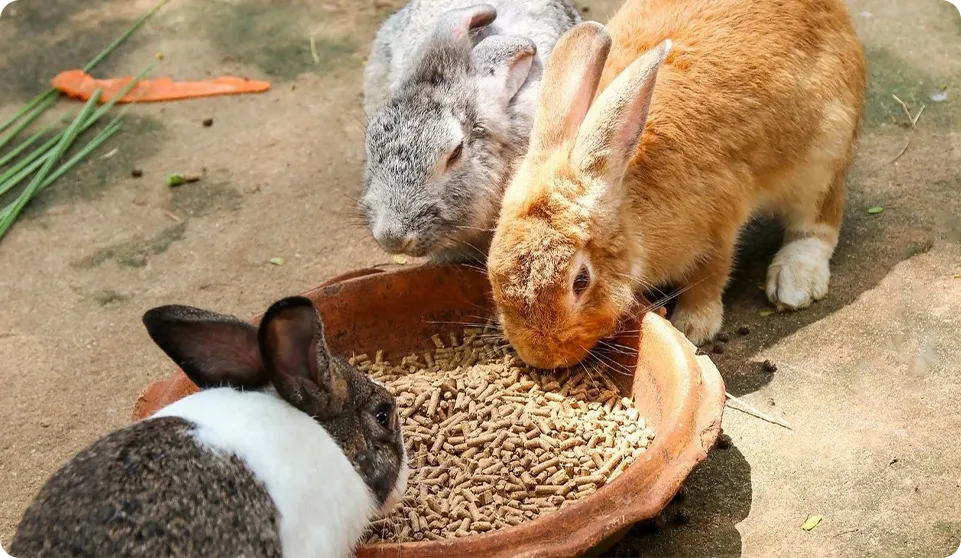
The rabbit digestive system separates feed based on particle size:
- Finer particles tend to remain in the cecum and participate in fermentation
- Larger particles help maintain gut motility and increase passage speed
When raw materials are ground too finely, feed retention time in the gut increases, raising the risk of excessive fermentation and digestive disorders such as diarrhea.
When particles are too coarse, although motility is stimulated, overly rapid passage may also lead to abnormal gut function in extreme cases.
Recommended grinding particle size
Studies show that grinding fineness alone does not significantly change cecal fermentation.
Pellet materials should use mixed particle sizes, combining fine particles for fermentation with enough coarse fiber (>0.3 mm) to support gut motility.
Pellet Hardness and Durability
Pellet hardness and durability mainly affect feeding stability in rabbits and the risk of respiratory health issues in the feeding environment.
Pellet hardness and its effects
Pellet hardness refers to resistance to crushing and is usually measured with a hardness tester.
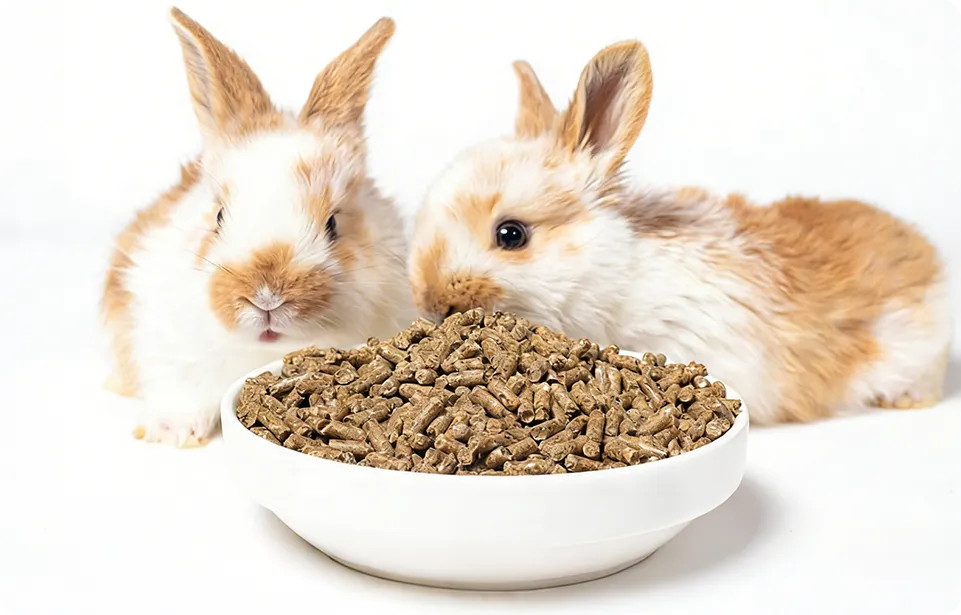
Rabbits tend to prefer firmer pellets, but hardness must be balanced. Pellets that are too hard can reduce intake and cause dental problems.
Studies in animal nutrition show that when crushing strength is kept between 7-13 kg, pellet hardness does not negatively affect rabbit performance.
Effect of pellet durability
When pellet durability is low, pellets tend to break and create dust during transport and feeding. This increases feed loss and may affect the respiratory health of both rabbits and caretakers.
In practice, rabbit pellets usually target a durability of around 95 percent. Research shows that a higher digestible fiber to starch ratio, such as dF to starch of about 1.44, helps improve pellet durability and reduce dust.
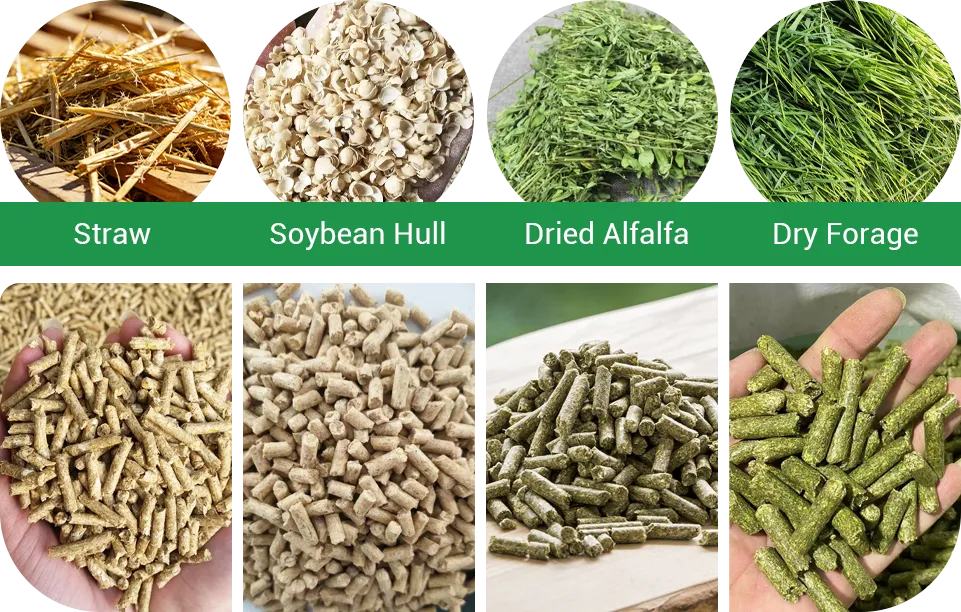
Feeding Effects of Different Feed Forms
Besides pellets and crumbles, some keepers use muesli mixes or forage based diets. Different feed forms can lead to noticeable differences in feeding behavior and health.
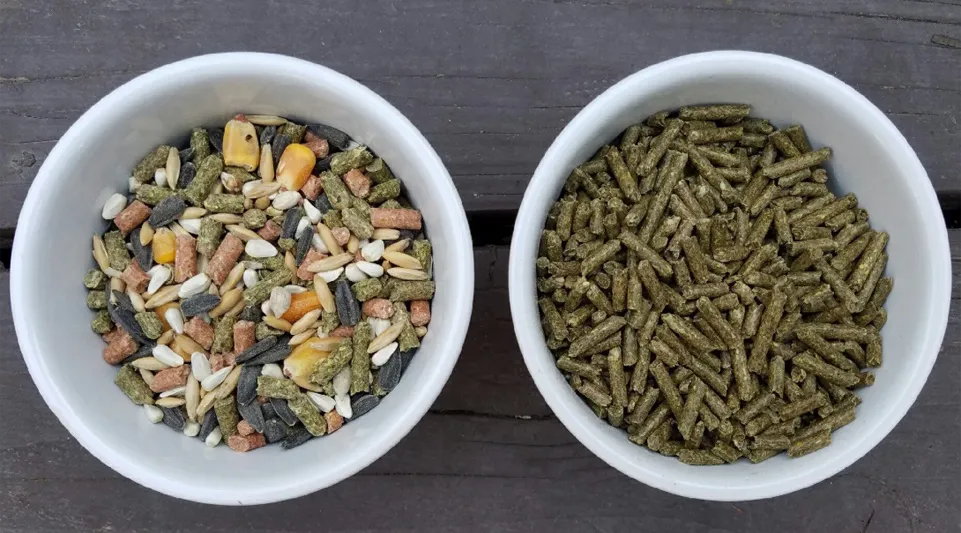
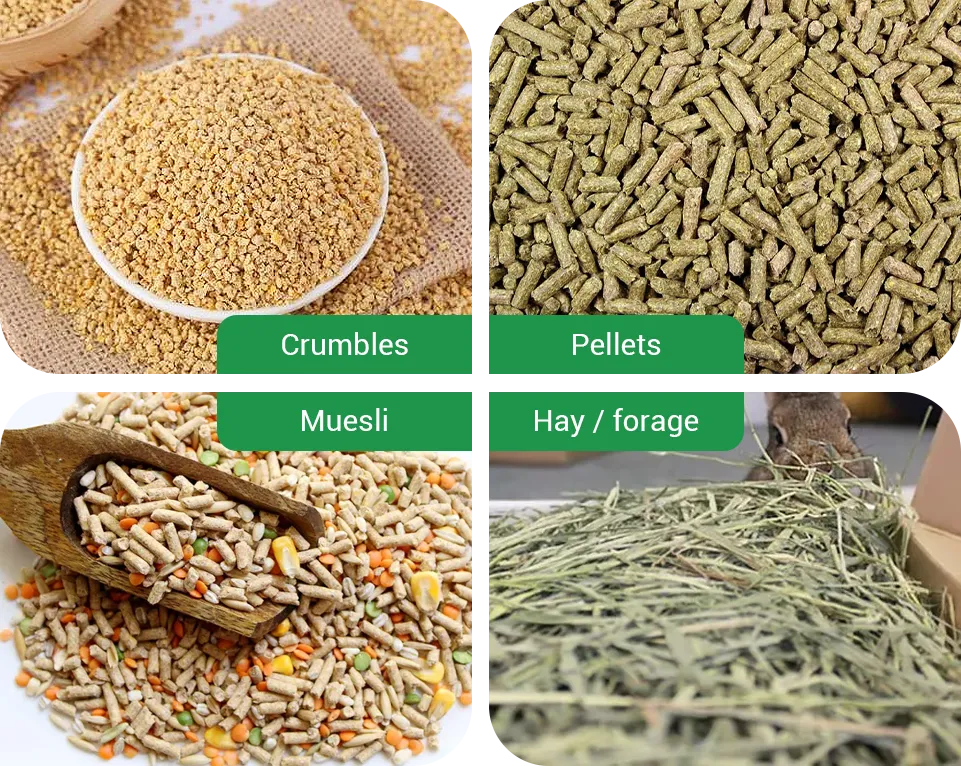
The comparison below covers the most common feed forms used in rabbit production, focusing on their effects on growth rate, feed waste, and overall health.
| Feed Form | Key Advantage | Main Concern | Use Stage |
| Crumbles | Low waste, easy intake | Higher cost | Young rabbits |
| Pellets | Consistent nutrition | Overhard pellets | Adult rabbits |
| Muesli | High palatability | Selective eating, obesity | Not for staple use |
| Hay / forage | Gut health support | Low energy | All stages |
Considering feeding behavior, feed efficiency, and digestive health, using pellets as the main feed with a constant supply of hay is a practical and widely used approach.
Good pellet quality, including proper size, hardness, and consistency, supports efficient feeding and long-term production performance.
For further information on rabbit feed pellet processing, feel free to get in touch.
Need Some Help?
Contact us quickly and we will reply you within 24 hours. We will not disclose your information.