
 Online Contact
 Send Message
Meat Goat Feed Types and Selection Guide
In meat goat farming, feed choice affects growth speed and feeding cost. Different feeds vary in use and results, and poor combinations can reduce fattening efficiency. Knowing the basic traits of common feeds helps improve feed use and reduce waste. Common feed types are briefly introduced below.
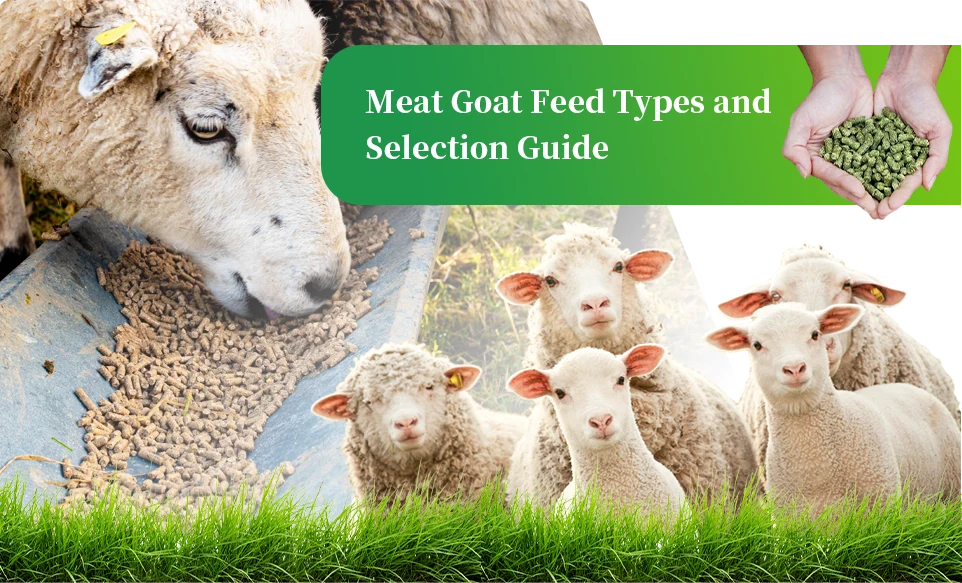
Common Feed Types for Meat Goats
Meat goat diets include a wide range of feed materials. Based on their source and nutrient composition, feeds are commonly grouped into roughage, fresh green forage, root and tuber crops, silage, concentrates, agro industrial by products, and mineral and feed additives.
In practical feeding, roughage should form the base of the daily ration. Other feed types are then added according to the production stage and local feeding conditions to achieve a balanced diet.
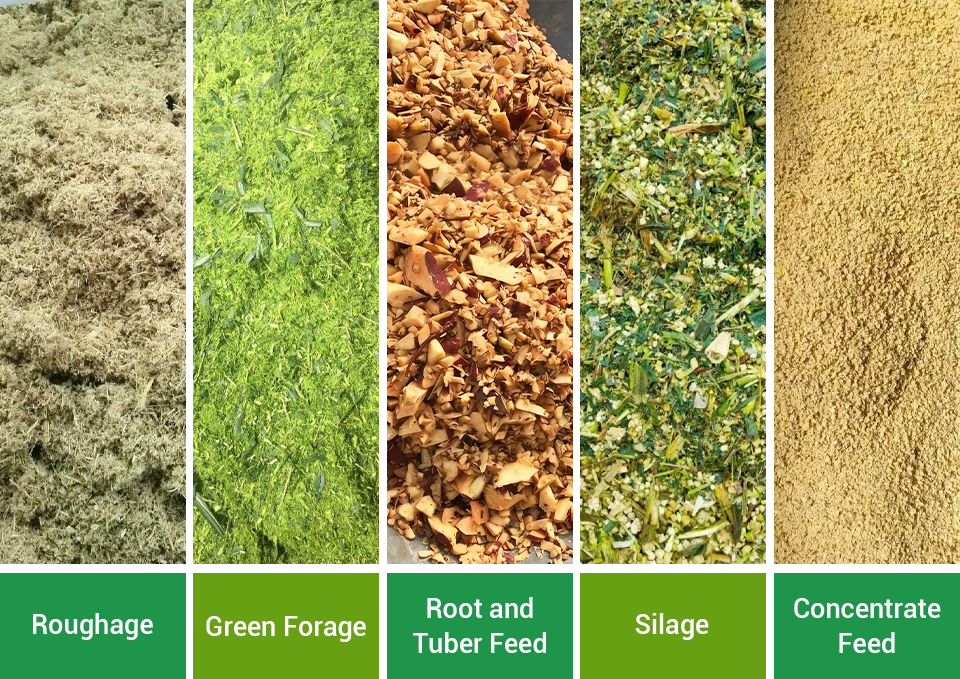
1. Roughage
Roughage forms the main part of the meat goat diet. It mainly includes crop residues, hay, and hull based feeds.
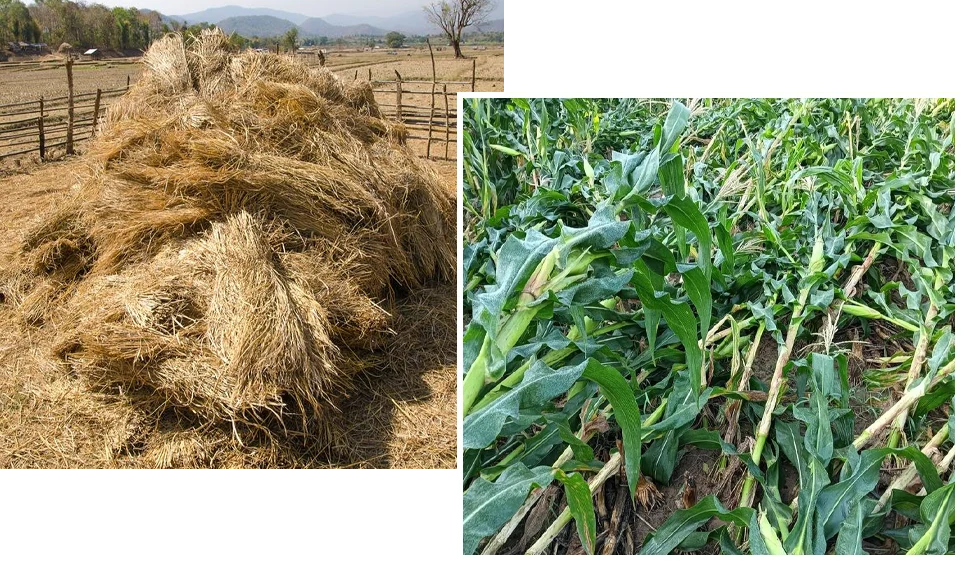
1.1 Crop residues
Crop residues are high in fiber but generally low in crude protein, minerals, and vitamins. They also lack key nutrients such as vitamins A, D, and E, as well as trace elements including cobalt, copper, sulfur, selenium, and iodine.
The nutritional value of crop residues varies widely. It is influenced by factors such as crop type and variety, harvest timing, and storage conditions. In general, leaves, leaf sheaths, and the upper parts of the stalk have higher feeding value than other portions.
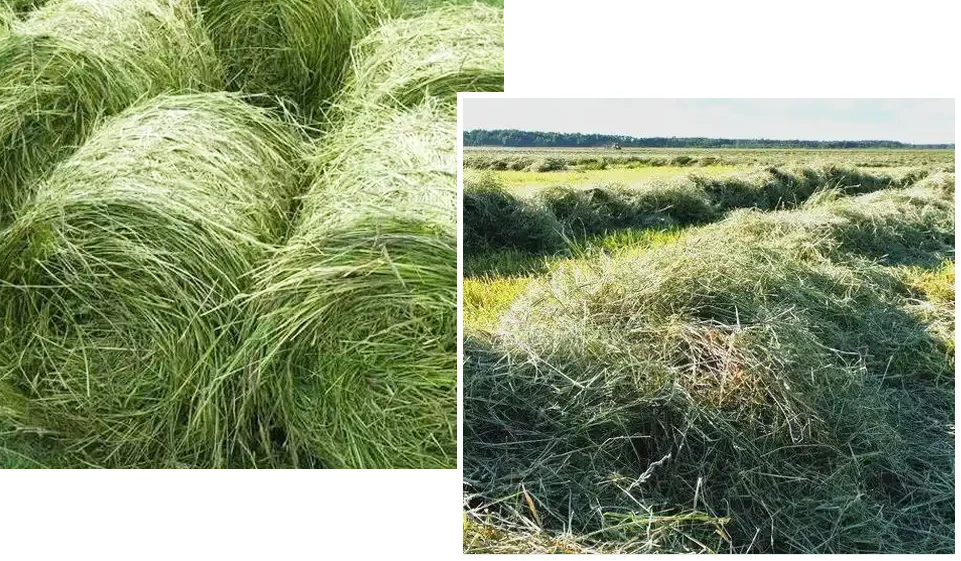
1.2 Hay
Hay is made from cultivated or wild forage that has been dried through dehydration or field curing. Its moisture content is typically below 15 percent.
Depending on nutrient content, hay can be grouped into fiber-based roughage hay, energy type grass meal, and higher protein legume hay such as alfalfa and milk vetch.
Grasses are usually harvested at the heading stage, while legumes are best cut at the early bud stage. Hay quality depends largely on harvest timing and drying methods. Proper curing helps limit nutrient loss and improves palatability.
1.3 Hull based feeds
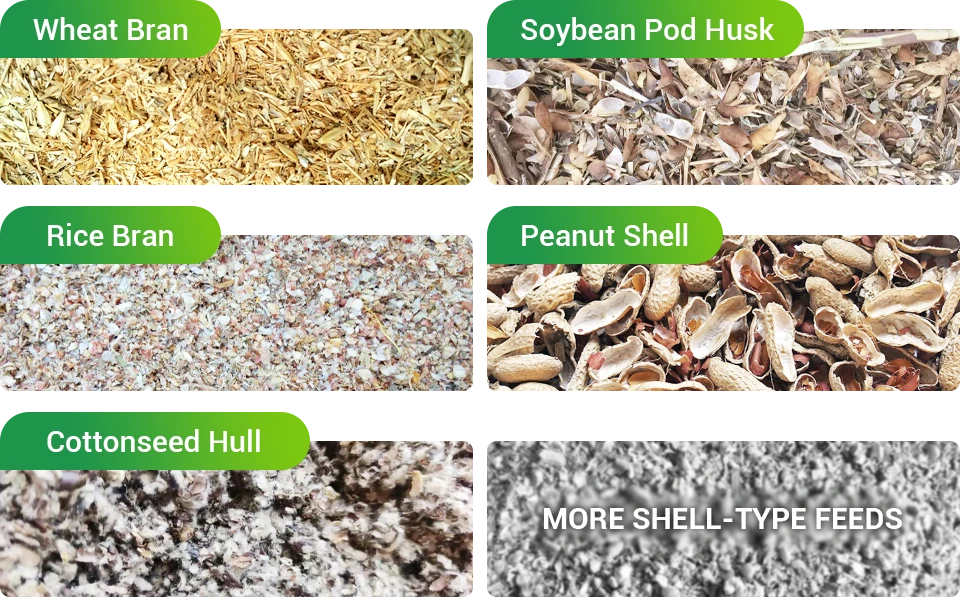
Hull based feeds include wheat bran, bean pod husks, rice bran, peanut shells, and cottonseed hulls. Compared with crop residues, these feeds generally contain more protein and less crude fiber, making them a useful supplement to roughage in meat goat diets.
2. Fresh Green Feeds
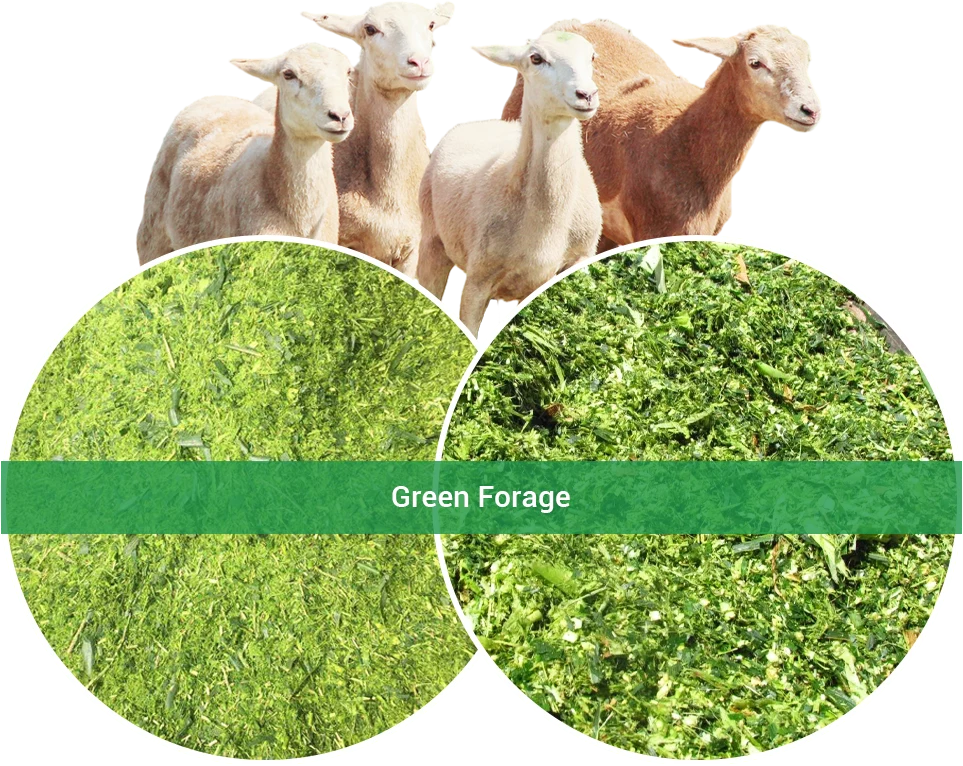
Fresh green feeds have a high moisture content, usually between 75 and 90 percent. They include weeds, forage grasses, tree branches and leaves, leafy vegetables, and aquatic green feeds.
When supplied in adequate amounts, fresh green feeds can meet most of the meat goat's needs for energy, protein, vitamins, and some minerals. They are therefore an economical and practical base feed in meat goat production.
3. Root and Tuber Feeds
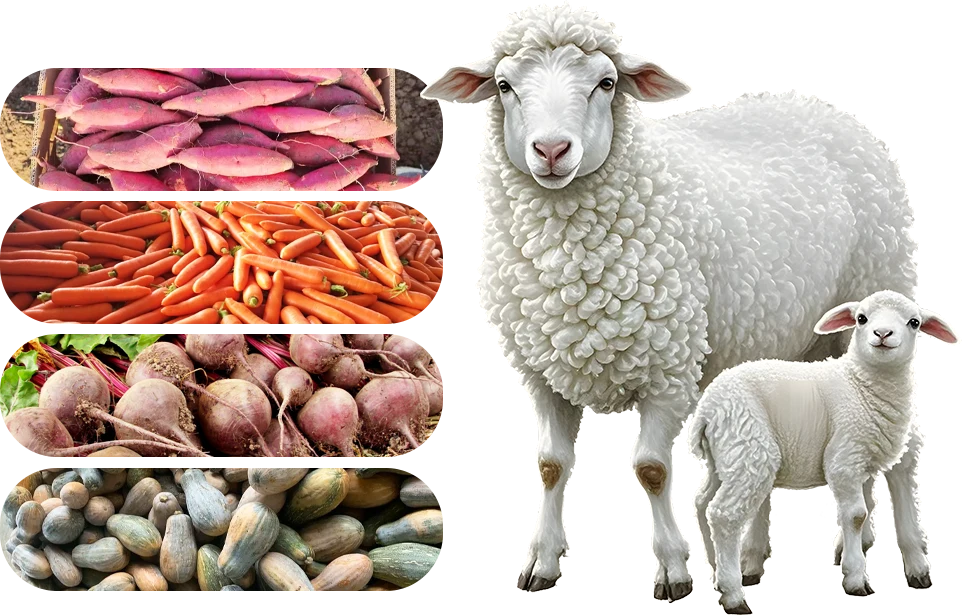
Root and tuber feeds mainly include sweet potatoes, carrots, beets, and pumpkins.
These feeds are high in moisture, low in fiber, rich in vitamins, and easy to digest. They are suitable for winter and early spring feeding and support body condition and milk production but should be combined with protein rich feeds.
4. Silage
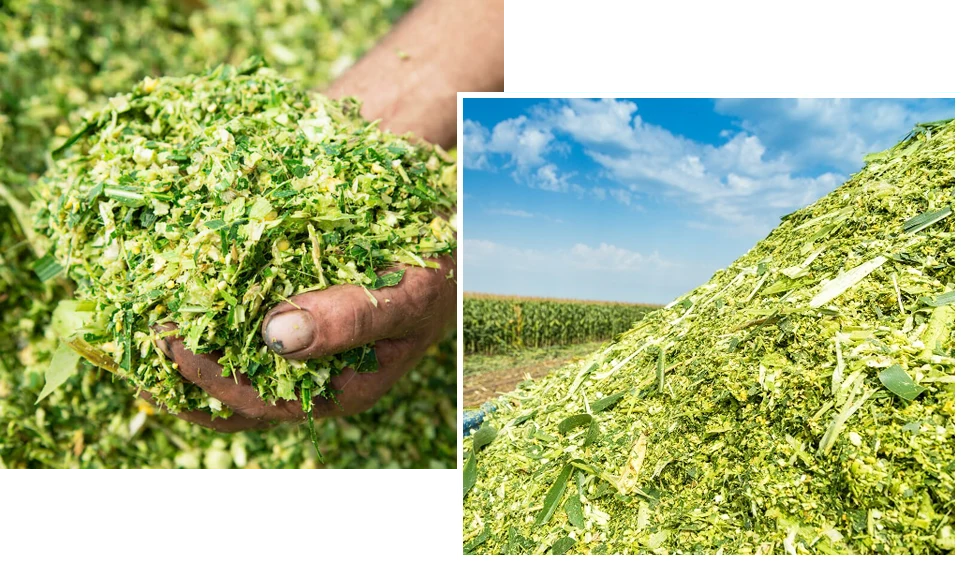
Silage is made by chopping fresh plant materials, compacting them, and sealing them for lactic acid fermentation. Moisture content is usually kept between 65 and 75 percent.
It has good palatability, stable nutrient retention, and can be stored for long periods, making it an important feed for winter feeding and indoor systems in meat goat production.
Common silage materials include forage grasses, green corn stalks, barley straw, peanut vines, sweet potato vines, wild grasses, and tree leaves.
5. Concentrates
Concentrates are used mainly to supply energy and protein and cannot replace roughage. For adult meat goats, the daily concentrate intake is generally 200–500 g.
Based on nutrient characteristics, concentrates are commonly divided into:
- Energy feeds: corn, barley, wheat, rice, sorghum
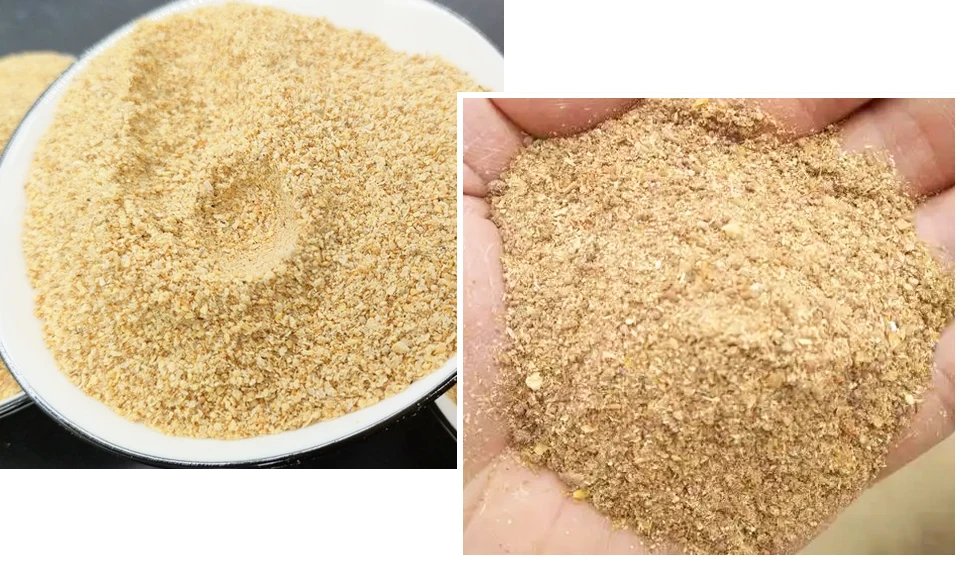
- Protein feeds: oilseed cakes and meals such as soybean cake and meal, peanut cake, rapeseed cake, cottonseed cake, as well as animal protein sources
When using concentrates, attention should be paid to mold prevention, toxin control, and proper feeding ratios.
Soybean cake has high nutritional value but contains anti nutritional factors such as trypsin inhibitors. These compounds are largely heat sensitive, so heat treatment at 100 – 110°C is recommended before use. Care should also be taken to avoid mold and spoilage.
6. Agro Industrial by Product Feeds
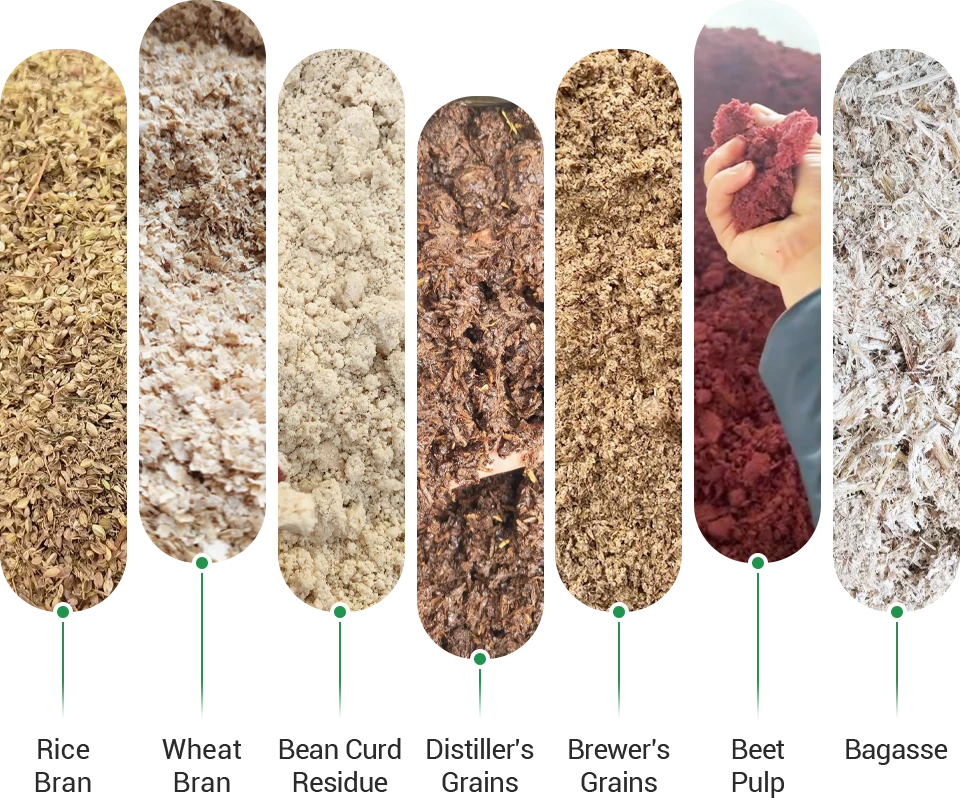
Agro industrial by product feeds include rice bran, wheat bran, tofu residue, distillers grains, brewer's grains, beet pulp, and sugarcane bagasse.
These feeds vary widely in nutrient content and are often high in moisture and prone to spoilage. They are best fed fresh or used together with roughage or silage to improve feed use and reduce feeding costs.
7. Mineral and Feed Additives
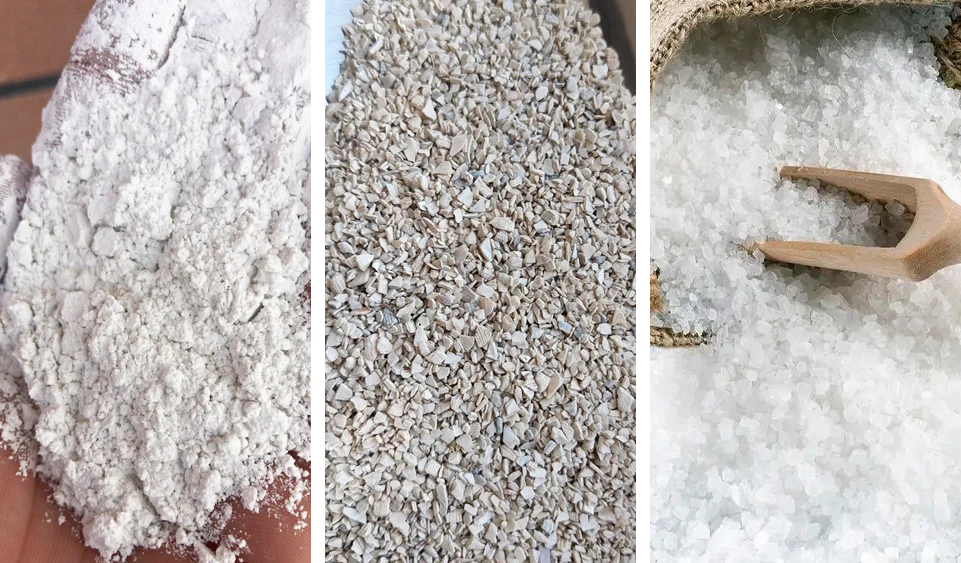
Minerals in natural feeds often do not fully meet the needs of meat goats, so calcium, phosphorus, sodium, and chloride should be supplemented according to the feeding system and production stage.
Common mineral sources include limestone powder, shell powder, feed grade calcium phosphate, and salt. Addition levels should be carefully controlled to avoid the risk of toxicity.
Diverse Feed Forms
The physical form of feed directly affects feeding behavior and digestion efficiency in meat goats.
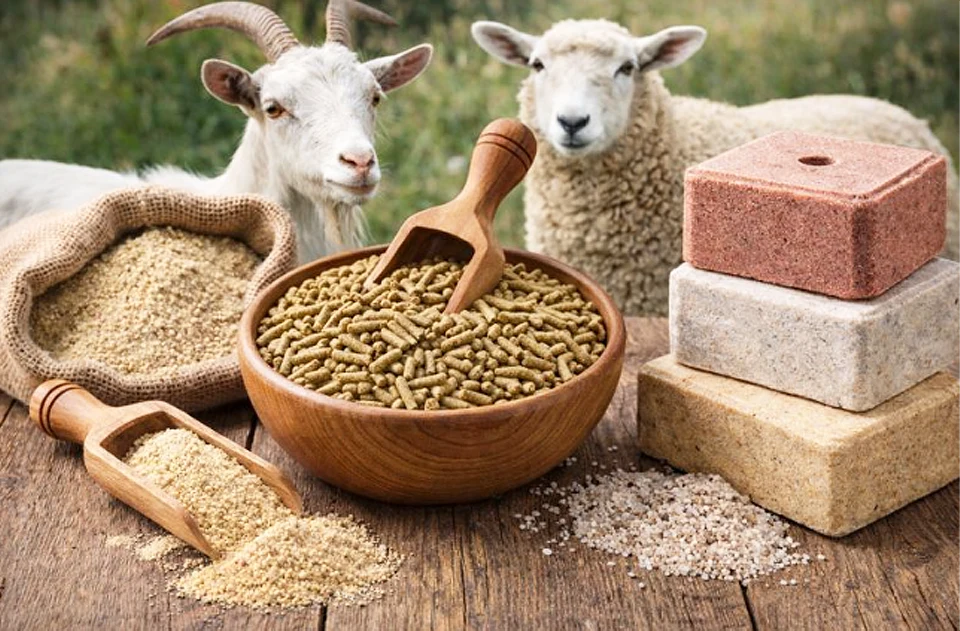
Mash feed
Low in cost and easy to mix, but less palatable and more likely to cause waste. Fine dust may also irritate the respiratory system.
Pelleted feed
Produced under heat and pressure, which gelatinizes starch and improves digestibility. Pellets have higher nutrient density, reduce selective feeding, and help limit waste, though processing increases cost.
Lick blocks
Mainly used for mineral supplementation under grazing or housing systems. For growing kids, compound nutrient lick blocks can support better development.
Choosing the Right Feed Types
Feed selection for meat sheep should align with their digestive capacity and nutritional needs, while also considering feeding conditions that affect feed consistency and delivery.
Matching nutrient needs by stage
Meat goats at different stages vary in intake capacity, growth targets, and feed efficiency. Feed types should be adjusted with each growth stage to balance performance and cost control.
| Growth Stage | Recommended Feed Types |
| Kids (0–3 months) | Milk replacer, gradually transitioning to complete kid feed |
| Early fattening stage | High quality roughage with a moderate amount of concentrates |
| Fattening stage | Complete pelleted feed or energy-based compound feed |
| Pregnant does | Roughage as the base diet with added concentrates |
| Lactating does | High energy concentrates combined with succulent feeds |
Feed choices shown are for reference only. Actual feeding should be adjusted to local conditions.
Different feeding systems
Different feeding systems lead to clear differences in feed intake and nutrient needs in meat sheep. Feed selection should be adjusted accordingly.
| Feeding System | Recommended Feed Strategy |
| Full confinement housing | Complete compound feed, with added silage or roughage |
| Semi grazing and housing | More protein concentrates in dry seasons; more energy feeds and roughage during green forage seasons |
| Intensive fattening | Mainly pellet feed to reduce waste, with selected by products |
Feed strategies should be adjusted to local conditions to balance performance and cost.
Meat Sheep Feed Formula Reference
The following formulas are common examples for growing and intensive fattening meat sheep. Ratios can be adjusted based on local raw material availability and feeding conditions.
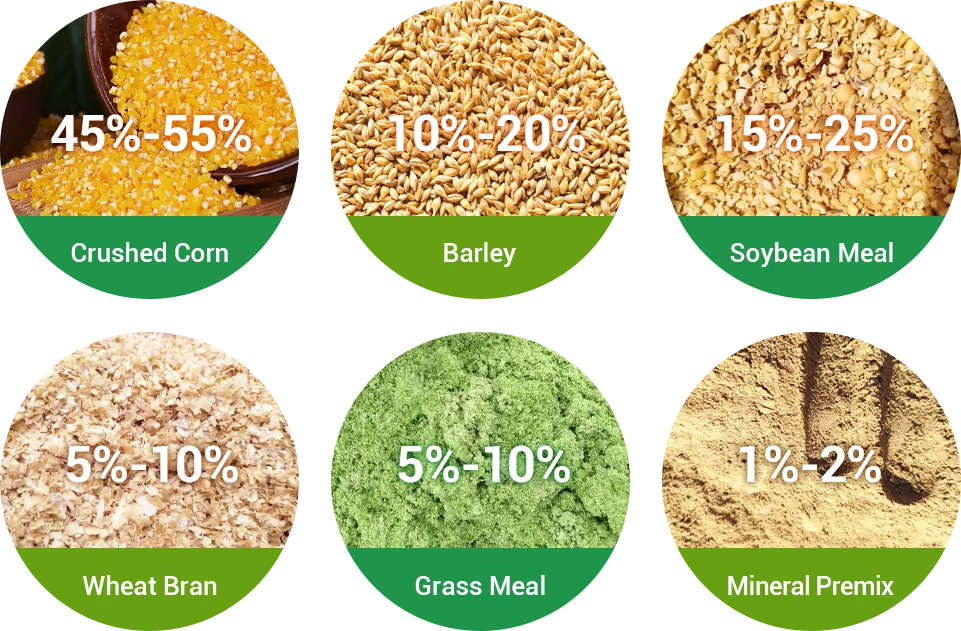
Lamb rapid growth stage
| Ingredient | Typical Ratio (%) |
| Cracked corn | 45 to 55 |
| Barley | 10 to 20 |
| Soybean meal | 15 to 25 |
| Wheat bran | 5 to 10 |
| Hay or alfalfa meal | 5 to 10 |
| Mineral premix including salt calcium and phosphorus | 1 to 2 |
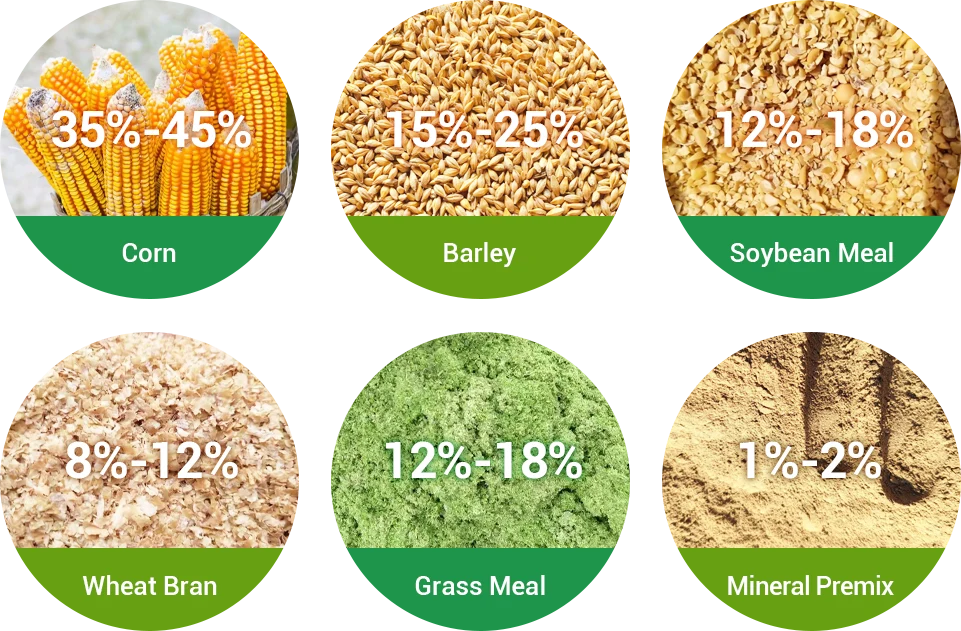
Mid growth stage
| Ingredient | Typical Ration(%) |
| Corn | 35 to 45 |
| Barley | 15 to 25 |
| Soybean meal | 12 to 18 |
| Wheat bran | 8 to 12 |
| Hay or silage meal | 12 to 18 |
| Mineral premix | 1 to 2 |
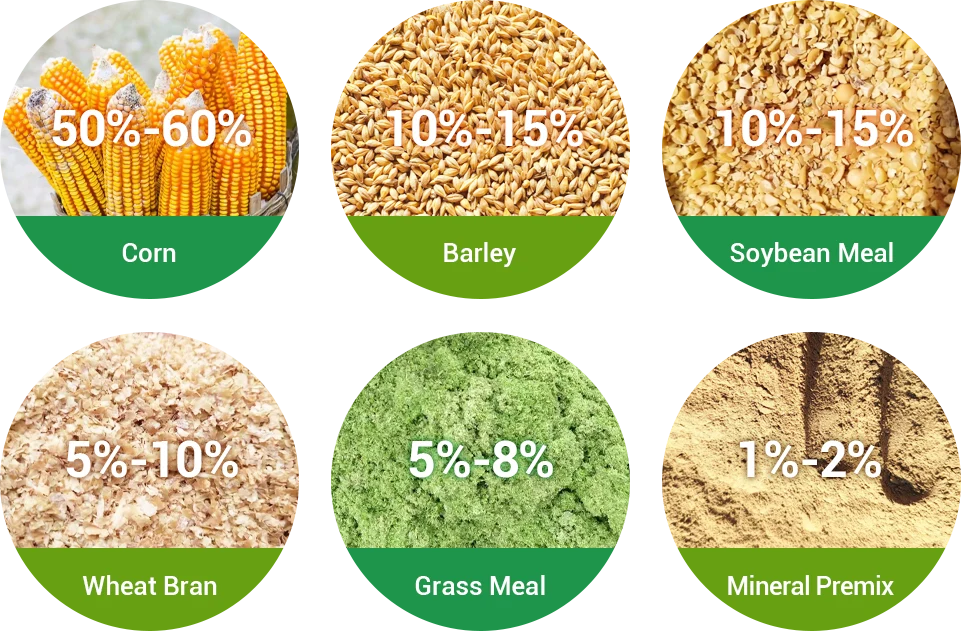
Final stage
| Ingredient | Typical Ratio % |
| Corn | 50 to 60 |
| Barley | 10 to 15 |
| Soybean meal | 10 to 15 |
| Wheat middlings or bran | 5 to 10 |
| Hay meal | 5 to 8 |
| Mineral premix | 1 to 2 |
Goats at different growth stages have clearly different energy and protein requirements. For related feeding principles and formula examples, refer to Goat Diet and Feed Formulas for Each Growth Stage.
Alternative Feed Ingredients
When using alternative ingredients, consider nutrition, cost, and availability. These alternatives help reduce feed costs and ease raw material constraints.
Common options and recommended substitution levels are listed below.
| Primary Ingredient | Alternative Ingredients | Recommended Replacement Level |
| Corn | Sorghum, barley, wheat, DDGS | Single grain ≤ 30% |
| Soybean meal | Cottonseed meal, rapeseed meal, peanut meal | Up to 50% replacement |
| Mulberry leaves, tree leaves | 10–20% | |
| Urea (NPN) | Adults only, 8–10 g/day | |
| Alfalfa, hay | Corn stalks, wheat straw, rice straw | ≤ 60% of roughage |
| Peanut vines, sweet potato vines | 15–25% | |
| Bagasse, tofu residue | Supplement only |
Alternative ingredients and levels can be adjusted based on local availability and cost.
When switching to alternative ingredients, allow a 7–10 day transition by gradually increasing the new feed, and pay close attention to mold and quality loss during storage, especially for by products and crop residues.
A balanced feed structure is key to healthy growth and steady fattening in meat sheep. Adjusting feed types, ratios, and processing to actual conditions improves feed efficiency without compromising performance.
We provide equipment solutions for practical meat sheep feed processing needs. Contact us for further details.

Need Some Help?
Contact us quickly and we will reply you within 24 hours. We will not disclose your information.